

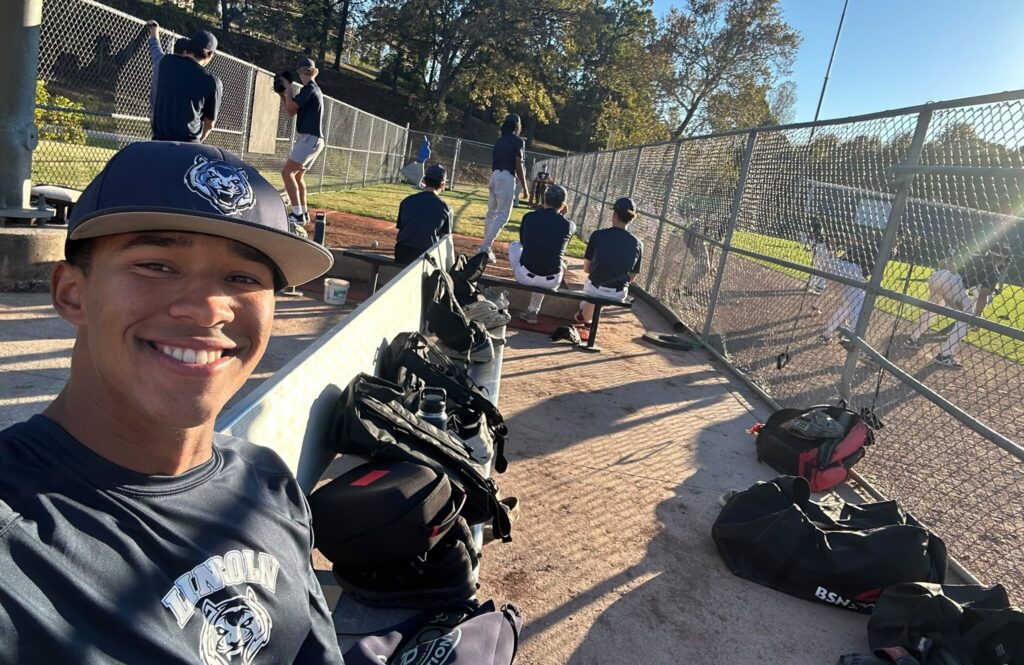
For many young baseball players, the dream lies in America: more games, intensive training, and the chance to test yourself against other ambitious players every day. For Samuel Donner, that dream became a reality. Through Slamstox, he made the move to Lincoln University in Missouri, where he has been playing for an NCAA Division II program since this summer and is combining his studies with college baseball.
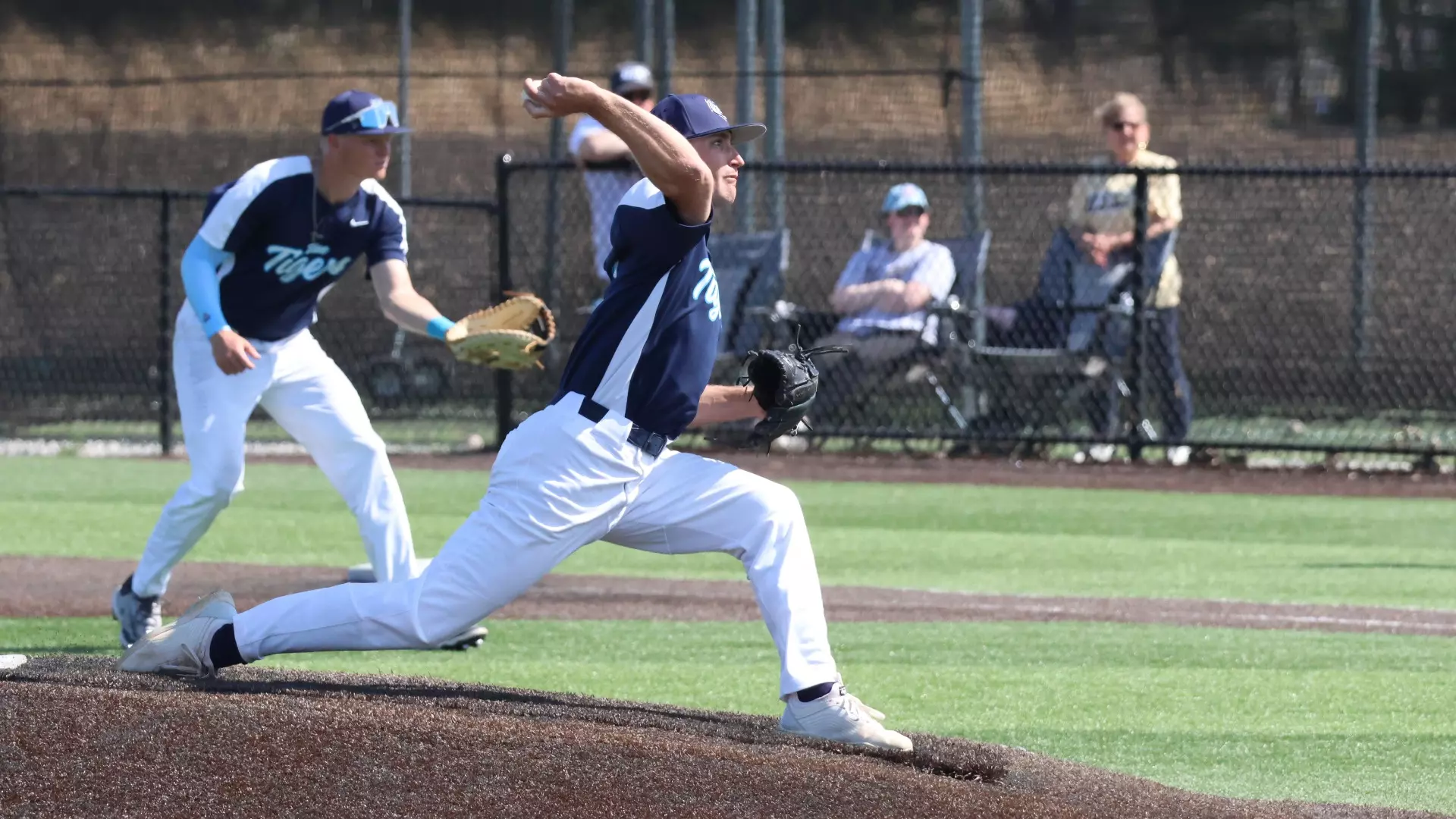
Samuel started playing baseball relatively late, but he knew early on that he wanted to go far. These days, his daily life in the U.S. revolves largely around the sport, and he has a clear goal in mind: to develop into the best pitcher he can be and ultimately get a chance in professional baseball.
We spoke with Samuel about his baseball journey, his decision to attend Lincoln University, the differences between the Netherlands and the U.S., and his ambitions for the future.
How did your baseball journey begin, and when did you first dream of studying and playing baseball in the U.S.?
“I started playing baseball when I was twelve. After about two years, I was really in love with the sport and realized I had quite a bit of talent for it. I knew I wanted to go as far as I could, and that the United States would ultimately be the best place to do that.”
Together with my parents, I started looking into my options. We realized that college baseball was a great way to combine high-level baseball with my studies, and that Slamstox could help me through that process.”
How did your journey go from your first contact with Slamstox to securing a spot at Lincoln University?
“Actually, it all went pretty smoothly. I worked hard to improve my game while also maintaining good grades. After Slamstox sent my profile to schools, several universities expressed interest.
“I was able to talk to several coaches and got help with the questions I had throughout the process. In the end, Lincoln University felt like the best option for me.”
Why did you choose Lincoln University?
“Lincoln has a fledgling NCAA Division II program, and the university also offers an engineering program, which was important to me.
Plus, I knew the team needed pitchers. That’s why I saw a good opportunity to prove myself, become part of the team, and earn playing time if I performed well.”
How did you find the transition from the Netherlands to an NCAA Division II team?
“What really struck me is that sports are taken much more seriously here in the U.S. There’s also a lot more competition within your own team than I was used to in the Netherlands.
“Almost every player who plays college baseball today was one of the best players in high school. So you find yourself in an environment with a lot of guys who are used to being good.”
Samuel also says he notices a clear difference between the various college levels.
“There’s a lot of talent in Division II, but not everyone works equally hard. If you have talent and work really hard in the Netherlands, you can already make it to a good level here. I think Division I is really different. That’s where the best college players in the country play, and many of them aim to turn pro.”
What was your experience with the training sessions and life as a baseball player in the U.S.?
“Every day here is really all about baseball. You train a lot, and you’re sore somewhere almost every day. That’s a big difference from what I was used to.
I also noticed at first that many American players are a bit more technically advanced. Many of them have been playing baseball since they were three or four years old. I started later, so in that regard, they’re sometimes a bit more polished.”
However, according to Samuel, that doesn’t mean he feels he has less talent.
“Throughout the fall, I realized more and more that I’m just as talented as the other players here. During the last few games, I started to get more and more used to the level of play, and I was one of the better pitchers on the team.”
What is your life like as a student-athlete, and what has been your best experience so far?
“Because you live on campus and are with the team every day, you get to know a lot of people very quickly. You spend an awful lot of time with your teammates, which helps you build strong friendships quickly.”
“My best experience so far was the last game of the fall semester. Throughout the season, I already felt that I could keep up with the rest of the team in terms of talent, but in the final games, I was actually able to show it. A few of the guys hadn’t expected that from me, so it was fun to prove what I was capable of.”
What do you hope to achieve in the United States in the coming years?
“I hope to make the jump to Division I in two or three years. Ultimately, I want to get to a level where I have a chance of being drafted.
My big goal is to make it to the Major Leagues and eventually become the best pitcher in the world.”
What would you say to Dutch baseball players who share the same dream?
Samuel is clear on this: in his view, the motivation to go to the U.S. really has to come from the sport itself.
“If you love baseball and really want to give it your all to eventually turn pro, then moving to the U.S. can be a great step. But you have to know why you’re doing it.
Life here revolves largely around baseball. You have to be willing to give up a lot for it and work hard every day. If you truly have the talent, motivation, and ambition to become a professional baseball player, then it can definitely be worth it.”
Everything for the next step
In any case, Samuel has a clear vision of his goals. From a relatively late start in the Netherlands to college baseball in the U.S.: he has made great strides in a short amount of time.
At Lincoln University, he now has the opportunity every day to develop as a pitcher, gain experience in American college baseball, and discover just how high his ceiling is.
His ambition is clear: to move up to Division I, put himself on the radar for a potential draft, and ultimately make it to professional baseball. For Samuel, his adventure in Missouri is therefore not a final destination, but rather the beginning of the next step.
Would you like to follow in Samuel’s footsteps and move to the U.S. to combine baseball with your studies? Read more about your options here and feel free to contact us—we’d be happy to help you explore your opportunities.