Slamstox helps students combine their passion for sports with studying at top universities in Europe! Do you dream of studying in Scotland or in the middle of Rome, for example, while continuing to play sports at a high level?
Playing sports and studying at a boarding school in America is a great step for students who do not yet want to or cannot go to college. Enjoy American facilities and intense sports culture as a gap year, or to best prepare for your college adventure.
Slamstox helps returning student-athletes take the first step in their social careers because student-athletes are mega interesting for the Dutch job market. Check out our collaborations or contact us to see what we can do for you in your career!
Want to boost your professional sports career? Slamstox helps athletes with marketing, commercial contracts and sponsorships. From NIL deals to partnerships. Together we build your branding as an athlete.
Insights, fun & more
All the fun, crazy, funny and beautiful articles related to College Sports: you can find them here!
Slamstox College Tennis Showcase 2026 Live!
Watch the Slamstox College Tennis Showcase live online! All matches will be filmed, and livestreamed via the link below,.
After the Showcase, all matches will separately be uploaded to our online video platform and will be shared with coaches and players. Enjoy watching and see you soon!
In this article you can read more about the experiences of slamstox tennis player Stijn Paardekooper as a student-athlete in the USA! In 2019 he reached the quarter finals in the singles at NK U16, and became Dutch champion in the doubles. In 2020 he made it to the semi-finals in the double U18 with Brian Bozemoj. A few months ago, the 17-year-old tennis player started his career at St. Bonaventure. A beautiful private university in the state of New York where he combines Division I tennis with a study in Business Management.
In this interview, Stijn tells all about his experiences so far, what his team and coach are in the USA and how tennis in the Netherlands is compared to college tennis in the USA. You can read it all below!
Hey Stijn, welcome! We know you of course, but the readers don’t yet. Can you, to begin with, tell us a little about yourself? My name is Stijn Paardekooper and I am 17 years old. I am from The Hague. I did high school at Dalton Voorburg and now I am a student at Bonaventure university. That is a private university, it is a smaller university with about 2,500 students.
Can you tell us a bit more about your tennis background in the Netherlands? Where did you train, how often did you train, what kind of tournaments did you play? I trained at Leeuwenbergh. I trained every day except Saturday, which was a rest day. I trained an average of 3 hours a day in the Netherlands. I played a lot of JRT tournaments and sometimes ITF tournaments. I wanted to play more NRT tournaments this year, but because of covid I hardly got to play any matches.
When did you decide you wanted to study and play tennis in the USA? Was it a difficult decision and what was decisive for you? It has always been a dream to go abroad and train and play matches. Then I heard about the concept of college tennis. I saw that a number of other good youth players wanted to make this step and from that moment on I started to get more interested in college tennis. Playing with 8 to 12 good players around you but also the facilities that the universities offer: it is almost impossible to imagine in the Netherlands. The level of the teams around us is also very high, which is you play many good matches. I also thought it would be great to study abroad. I made the decision in October 2019 to start working with Slamstox to find a good university for me.
“Playing with 8 to 12 good players around you but also the facilities that the universities offer: it is almost impossible to imagine in the Netherlands. The level of the teams around us is also very high, which is why you play many good matches.“
Are there many corona measures at your university and what was it like to start during the corona crisis? It is quit alright actually. We have to wear a face mask both inside and out. But it can be taken off in the dining hall, my room or during training. Furthermore, we are tested before every match. At the university itself, there are fewer students per classroom due to the 6 feet distance.
As a Freshman you are now part of St. Bonaventure University. How did you experience your first months? I started in the spring semester (most students start in the fall). So I left for the states in mid-January. In mid-December, a message came from the government that we were no longer allowed to train indoors in the Netherlands. And I started training in the US at the end of January because I first had to be quarantined for 5 days. So I hadn’t played indoors for 1.5 months. At the beginning it took me some time to get used to basically everything and to figure out my position in the team. Also what kind of teammates (character) I had and how the coach organizes the training. So it took me at least 2 weeks to get used to the atmosphere in the team and the way of training.
What was the decisive factor for you to choose St. Bonaventure? It is a D1 university, they normally play (without covid) against a lot of good universities, which ensures that we play a lot of good matches. The connection with the coach was good and the university is academically highly ranked.
St. Bonaventure Campus
Is the campus as you expected in advance? And are there things that surprised you? As we are a private school, the campus is smaller than other universities, theres only 2,500 students. It is a very beautiful campus. Lots of nature and excellent dorms and other facilities.
Can you tell us a bit more about the location of the university? The university is located in the state of New York, in Orleans. The area is very quiet, lots of nature. It can get very cold in winter, last year it snowed here for 1.5 months almost every day. I think that a university in a big city would be very different, we can mainly be found on campus. But if you have a car you do have some options to go to.
You are now playing in Division I, which is the highest level of College Tennis! How do you feel the level is compared to the Netherlands? Normally we play a match almost every weekend, but due to covid it is not possible to stay overnight this semester. Which is why we cannot play against some schools at the moment. For this year ‘Cleveland state’ is our best opponent, but normally we would play against schools like ‘Virginia tech’ and ‘Notre dam’. There are many good players in D1. The biggest difference is that you play against different players here for every weekend, while in the Netherlands you will encounter many of the same names.
“There are many good players in D1. The biggest difference is that you play against different players here for every weekend, while in the Netherlands you will encounter many of the same names.”
Do you feel that you are now more part of a team than in the Netherlands? Yes, it is very cool to experience this. You see each other every day and you prepare for a new match every week. The atmosphere on the court during the matches is very cool to experience. The matchdays are also very nice, traveling with a team in such a big bus often ensures beautiful moments.
Can you tell us a bit more about your tennis coach? He has been with this university for 25 years now. My coach is more focused on the tactical plan. He loves offensive tennis and wants his players to come forward. That way of playing suits me, so that was also one of the reasons that I chose this university. The doubles are played a bit differently here than I was used to in the Netherlands. The first chance to get on the net player, is often used. No bad thing. But that is why we often train this, several players have already been hit hard, fortunately me not yet. Furthermore, not much time is spent on technique during training.
We see in your roster that you are in a very international team. How is that? I am very happy to have a team with many international players. I think that also helped us in the beginning.This semester we played against a team with only Spanish speaking guys, I’m happy that’s not the case in our team.
Which study are you following now and is it difficult that the study is in English? I am following ‘Business Management’, the connection of the study to my secondary school in the Netherlands was good. In the beginning it is difficult in English, because you do not know some terms yet. But I’m used to it now.
Do you notice that the combination of sports and study is better in the US than in the Netherlands? Yes it is better now, mainly because everything is on campus. So you don’t have to travel a lot. On my campus it is at most a few minutes walk. Another big difference is that there’s one head coach here, and his only focus is the team. In the Netherlands, your trainer also has many other individual players he or she is focussing on.
Can you give us an idea of your average day as a student-athlete? We train from Tuesday to Sunday, Monday is a rest day. We played matches for the past 6 weekends, my Tuesdays look like this:
– 6.45-7.30 Lift/fysieke training – 7.45-8.30 ontbijten – 10.00-12.00 class – 12.30-2.30 practice – 15.00- 15.30 lunch – 16.00-17.30 homework – 20.00- lift/ fysiek – 21.00 dinner
Have you made a lot of new friends yet? Are they mainly tennis players or also other student athletes? I mainly hang out with the guys from my team. I only came to university this semester (spring), because most students arrived in the fall, I noticed that many groups of friends had already been formed. But in general, the athletes on your team are often the people you interact with the most.
Do you notice that student-athletes have a kind of ‘special status’ in the US? Yes, we have a head coach, assistant coach and a physical trainer who are available for 24/7. We also have 24/7 access to all sport facilities. We have our own study room and our own gym for athletes. We get earlier access to choose our courses for the coming semester, because you can then adapt them to your training schedule.
“We have a head coach, assistant coach and a physical trainer who are available for 24/7. We also have 24/7 access to all sport facilities..“
Do you follow a healthy diet or do you sometimes enjoy a good American burger? We are not on diet. But there’s plenty of choices such as rice, pasta, vegetables, potatoes, meat, sandwiches and fast food. The quality of food is considerably lower than in the Netherlands. Healthy eating is not difficult for me, I came here more for tennis than for my study.
What do you miss most about the Netherlands? Perhaps a bit obvious, but what I miss most are my family and friends in the Netherlands.
Did you do anything special in the field of sports/study to optimally prepare for the USA? In the months before I left, I was out of school, so I could fully concentrate on tennis. As a result, I was able to train a lot and hard. Which is why I was well prepared to play, that was important since the season started 3 weeks after I arrived.
How did you experience the process with Slamstox? Good, Slamstox has good contacts with many high ranked D1 universities. They help you every step on the way.
What would you like to advise future student-athletes? Start on time! If possible at least a year in advance. You want to be sure that you choose the right school. Take initiative in the entire process, Slamstox will help you a lot with this, but you also have to do a lot yourself!
Do you, just like Stijn, want to become a student-athlete in the USA? Or would you like more information? Reach out, and we will help you!
American College Tennis: A Top Producer of Professional Tennis Players
John Isner, Kevin Anderson, Steve Johnson, Jennifer Brady, Danielle Collins… These are the prime examples that the transition from college tennis to the professional circuit is possible. But these five players aren’t exceptions. They are part of a large group of male and female ex-college players who have shown that a four-year-long college tennis adventure in the United States can optimally prepare you for a career as a professional tennis player.
If college tennis had been a country, it would be the country with the most players within the ATP Top 300: 33 in total. For the Top 200, twenty pros played college tennis. And 120 ex-college players are ranked within the Top 750! On the women’s singles tour, 18 ex-college players find themselves among the best 300 players; and more than 10% of the top 350 female doubles players competed in college.
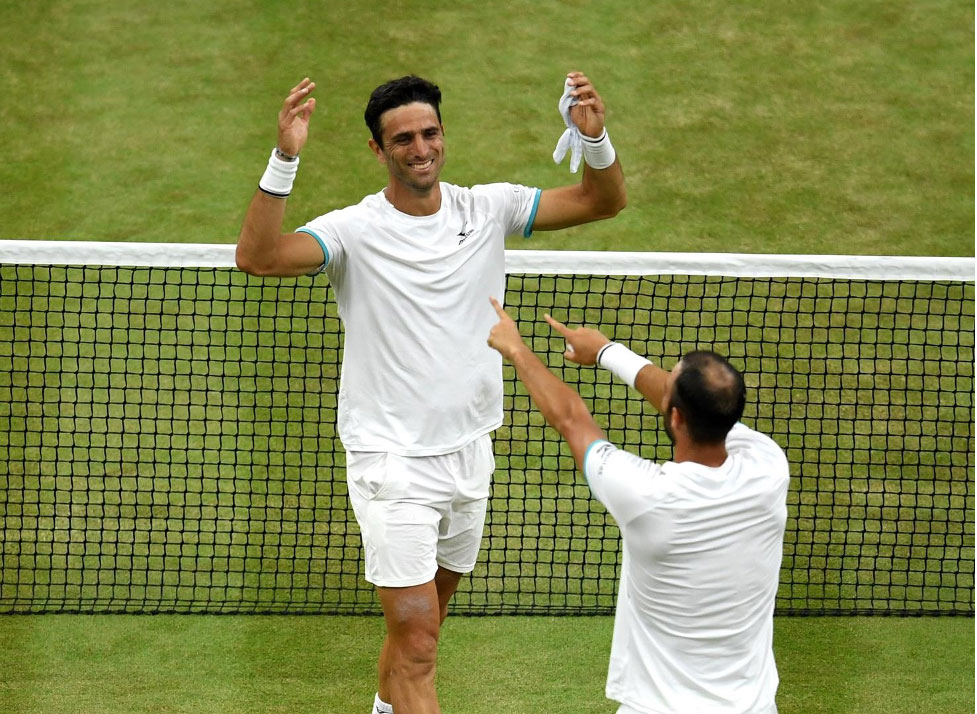
Former USC tennis player Robert Farah wins Wimbledon
On the ATP men’s doubles ranking, the numbers are even more telling. 19 of the 100 best doubles players have played college tennis, like Robert Farah, the current world number 1 who represented the University of Southern California, the Bryan brothers, who both played at Stanford University, and German Andreas Mies, who has now won two consecutive Roland Garros trophies. There are also Dutch players who are now active in the professional circuit after competing in college. Jean-Julien Rojer represented the University of California, Los Angeles (UCLA), Paul Haarhuis won all grandslams after competing at Florida State University, and ATP #144 Sem Verbeek played for the men’s tennis team of the beautiful University of the Pacific. But current pros did not only compete at the top American tennis universities. Joran Vliegen and Sam Gille, the 13th best doubles team in the world, competed for East Carolina University and East Tennessee State University respectively.
These numbers show that it is not a must to enter the pro tour directly after graduating high school. Both mentally and physically, men and women develop a lot between the ages of 18 and 23. Universities in the States offer state-of-the-art facilities and resources specifically designed to develop their student-athletes both at these fronts as well as in other areas tallow them to get the most out of their athletic and academic careers. It is also important to realize that in college tennis players, when compared to full-time professional tennis players, practice just as much and play even more matches. At the top tennis universities, the players are even taken to compete in professional ATP/WTA tournaments – all at the costs of the universities!
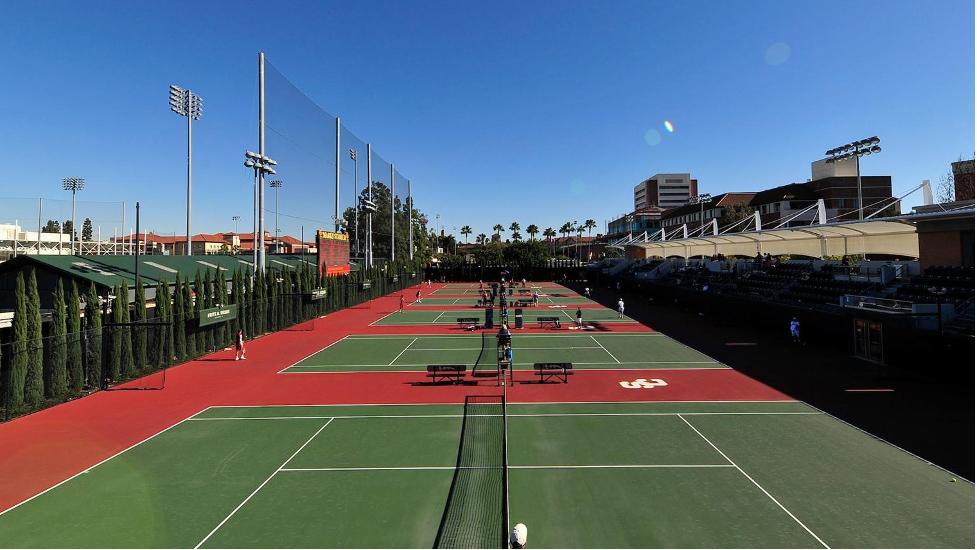
USC Tennis – Home of Slamstox Tennis Player Lodewijk Westrate
Did you know that…
Slamstox tennis players Lodewijk Westrate and Laurens Verboven play tennis and study at the University of Southern California (USC), just like Steve Johnson (ATP #72) and Yannick Hanfmann (ATP #98) did?
Slamstox tennis player Sander Jong represents the men’s tennis team of Texas Christian University (TCU), where current ATP #71 Cameron Norrie used to play as well?
Slamstox helps you make your dreams become a reality. Do you want to know more? Please contact us.
College tennis in the United States is growing. More and more young tennis players and tennis players see this as the ‘route to the top’ of the tennis world and we understand that. We would like to outline a number of advantages of college tennis. Read on quickly why college tennis is the ideal next step for you!
The system
The system in the United States is unique. Scholarships are awarded based on your qualities as an athlete and / or as a student. These scholarships often form the basis of the final choice to play college tennis in the United States. Sports and studying in the United States is different from all other countries because you can continue to make the combination here. You don’t have to choose one or the other.
The Social Aspect
We should not forget the social side of the story either. College tennis in the United States gives you the opportunity to meet people from all over the world. You do many things together with your teammates. Think for example of training, living and traveling together to your matches. The fact that American universities give out these scholarships gives many people the opportunity to have a unique experience as ‘student athletes’ in the United States.
Sports culture
Americans are almost all sports fanatics. This is reflected in the visitor numbers. Everyone is proud of ‘their’ school and they are happy to come and see those who receive scholarships to represent ‘their’ school. Most tennis players who play college tennis in the United States experience this as a sign of appreciation and respect.
Facilities
College tennis in the United States has almost no boundaries. Schools spend a lot of money on scholarships and on the facilities to promote performance as much as possible.
Are you enthusiastic and do you have the ambition to play tennis and study in the USA. c
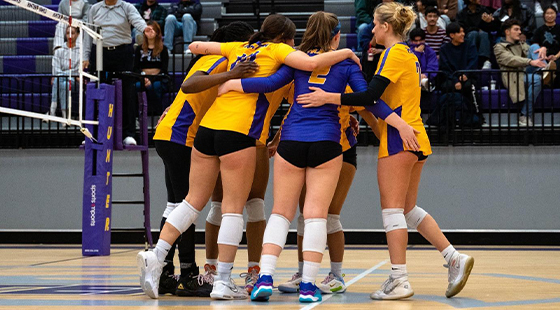
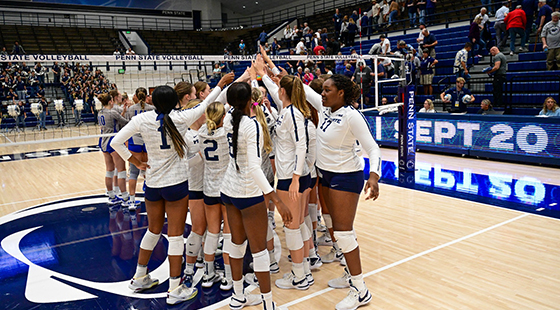
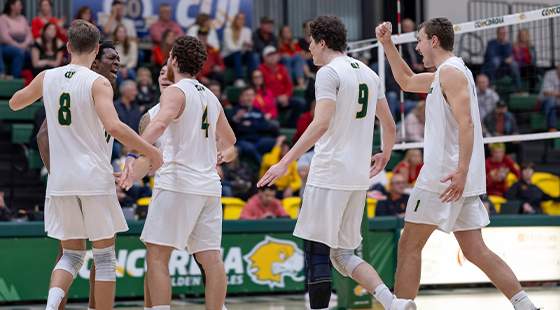
College volleyball is hugely popular in America, with women’s volleyball nearly rivaling the biggest sports. More and more young men and women are making the transition to continue their careers in America.
In our blog series ‘a year as…’, we often explore how a college year can unfold for our athletes. Because what exactly can you expect when you decide to go to America? The beginning of your first year in America can be exciting, especially if you’re not quite sure what to expect! That’s why today, we’re taking you through a year as a college volleyball player.
Summer Period
The start of your school year usually falls somewhere in July or early August. This is often a special period because the academic semester hasn’t begun yet, and the campus is still somewhat quiet. This means that only the athletes are on campus, everyone is preparing for the sports season. There’s intense training, working on team bonding, which is just as important because you’re suddenly part of a new team. Additionally, as an athlete, you can get accustomed to English, which is also nice for most before the semester really kicks off. So, it’s a fun first few weeks where you have time to adjust to everything that’s new!
The first semester
Late August through mid-December
The first semester (academically) typically begins around late August to early September. Before you even have to think about hitting the books, you’ve already had about a month of intensive training with your team. Around this time, you finally get to play your first practice matches.
In early September, things really ramp up because alongside the beginning of school, the college volleyball season kicks off. You often train daily, fitting it in before or after classes. After a long day, it’s time to tackle homework, maybe quickly call home to the Netherlands, and then hit the hay again. After all, the next day and the next training sessions are already looming. It’s a busy life as a student-athlete, but experiencing this time with your team and following the same schedule makes it feel less burdensome and a lot more enjoyable!
During the season, you typically play around 20 matches, which is comparable to an entire year in the Netherlands. However, this is condensed into a much shorter period, as the season lasts about three months. During this time, you often play two matches per week. This could be a home match on Friday and Saturday, or an away match on Thursday and Sunday. These away trips are often the most enjoyable. Distances in America are much larger, so if it’s feasible, you travel with the team by bus. However, there are times when you have to travel really long distances and take a plane. The atmosphere is always lively with the team, and there’s often time for enjoyable activities in between.
You do miss some school time, but the university takes this into account for student-athletes. As a result, you can often take exams at a different time or make up classes later on.
The season always concludes with the end tournaments. The conference championship tournament (a final tournament of your league), and if you’re really lucky, you may also get to go to the NCAA or NAIA Championships. It’s an incredibly cool experience! Here, the best teams compete for the prizes and the national title. By mid-December, the first semester comes to an end, marking the start of winter break. Many athletes choose to go back home during this time, allowing them to spend Christmas with family and friends. Plus, you have a month-long vacation.
The second semester
Mid-January through mid-May
In January, most students return to campus, and for volleyball players, academic priorities take precedence in this semester. The goal is to catch up on any academic backlog from the first semester. During this time, you train for about eight hours per week and do not play matches. Strength training is also crucial during this period. Additionally, you often focus on specific aspects of the game, such as passing or blocking, during practice sessions.
Since you don’t play matches during this time, you have weekends free. This means you can easily attend other sports events on campus—perhaps your university has a basketball team? Additionally, the free weekends provide the perfect opportunity to explore America. Trips to nearby cities or other attractions are often organized during this time.
This period lasts until spring break. Afterward, you ramp up training with the team again, and some practice matches are played. The goal is to prepare the team optimally for the next semester and the upcoming season.
In May, there’s another exam week, and then your first year is already over. Almost all student-athletes head home or to another vacation spot. It’s time to relax for a bit, but staying fit is also important. That’s why athletes always receive a fitness schedule to follow during the summer. Tip: Make sure to stick to this schedule; you’ll only benefit from it next year.
Summer break lasts until around mid-July to early August. Afterward, all student-athletes gather back on campus, and everything starts anew.
Men’s volleyball
But what about for men? The above doesn’t apply to them. The season for men’s volleyball actually falls in the second semester, exactly opposite to the women’s volleyball season. While the women start their season right away in September, the men’s season begins in January.
In the beginning of semester 1, the focus is on academics, and through personal training and strength training, gradual preparation for the season begins. Towards December, more team training is also conducted. After a short winter break (the men have to report back to campus earlier), a brief but intense period of practice matches follows. Mid-January marks the start of the competitive season. Similar to women’s volleyball, the season lasts about three months and culminates in the major end tournaments. Following this, there’s a brief period, and then by mid-May, their first year is also over.
The volleyball year in America is indeed quite different from that in the Netherlands. In the first semester, you play many official matches in a short period, especially in combination with the end tournaments. In the second semester, you don’t play official matches but focus on preparing individually and as a team for the upcoming competitive season. This highlights how professional and serious the sport is taken in America.
Are you interested in playing volleyball and studying in America? Then quickly get in touch with our volleyball specialists, Ron and Frederique, via this introduction form. We’re here to assist you every step of the way!
Last week we posted, a list of our top 10 best Indoor T&F facilities, this week it’s time to show you our top 10 T&F outdoor facilities. If you are a T&F athlete, pay attention here….. Some great facilities will pass by in this article. Check it out!
10. Andre Reed Stadium – Kutztown University
The Andre Reed stadium has been the home of the KU women’s and men’s outdoor track and field team since 1936! That’s quit a history right? The track was resurfaced in 2005 and became operational for the 2006 season. The outdoor track is a six-lane track with a long jump on the outer side of the field. The total capacity of this field is about 5,600 fans and has a site for parking. And check out the golden bear in the middle of the field…
Check out the Andre Reed Stadium below!
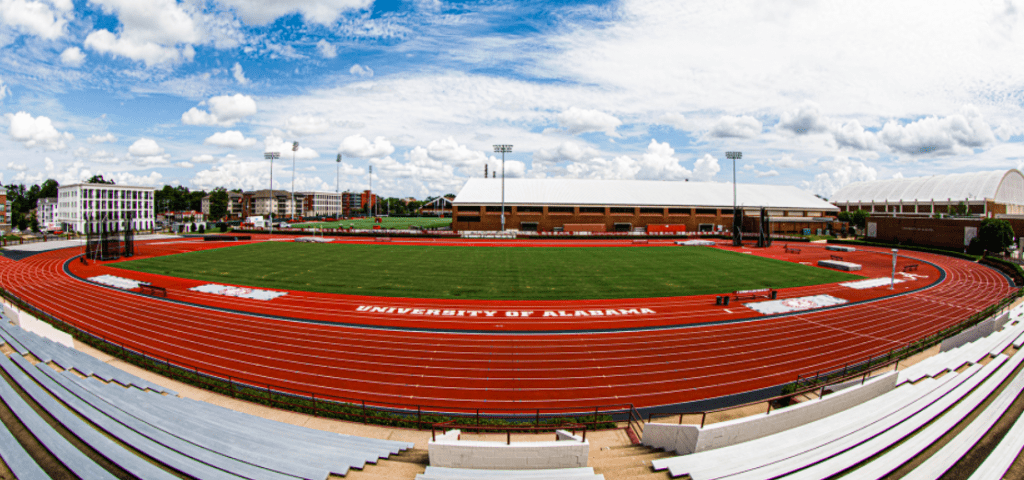
9. Sam Bailey Track and Field Stadium – University of Alabama
The Sam Bailey stadium first opened in 1975, and has been recently renovated. The goal of the renovation was to give the track and field athletes everything they need to become a successful high-level athlete. In this they succeeded…
The track is a nine-lane track with Beynon BS-2000 track surface. This is an ideal and durable surface for training and competition. The new renovation enhanced the seating capacity, the restrooms, the concession areas, and storage facilities.
The stadium includes a bermuda grass field that is used for javelin, discus, and hammer throw. It also includes a shot-put throw area at the end of the track outside the oval. This field is one of the few fields that is mainly used for track and field athletes. Let’s go Crimson Tide!
8. Cromwell and Kathrine B. Loker Stadium – University of Southern California
The original name of this track was Cromwell, named after the legendary coach Dean Cromwell. He is remembered as legendary since he and his teams won about 12 NCAA titles! After the lovely donation of 2 million dollars was given by an ex-student, Katherine B. Loker, it was decided to change the name of the stadium to ‘Cromwell and Katherine B. Loker stadium’. Quit fair you’d see, since Katherine donated about $2 million dollars to the stadium!
This track has had several Olympics athletes such as Jess William, Duane Solomon, Bryshon Nellum and Josh Mance. Not only this facility but USC in general, is known for ‘delivering’ several Olympics athletes over these past years. Great university, great facility!
7. Rock Chalk Track & Field Complex – University of Kansas
This track and field complex was built in 2014 and has been a host to several NCAA meets throughout the years. The Complex is 90,000 square feet, that include offices, training rooms, locker rooms, official rooms and athletic training facilities with a nine-lane track.
In 2016, it hosted the NCAA West Preliminary meet and the 2017 USA track and field Junior Championship one year later. The 2017 USA track and field Junior Championship was also hosted and this complex. The seating capacity of this complex is 7,543, so lots of fans can come and cheer for the athletes. The construction costs of this facility was $9 million. Whutttt…?!
Take a look at the great Rock Chalk Track below.
6. Clyde Hart Track and Field Stadium – Baylor University
6th place in this top 10 we find Baylor University! This university’ wonderful track stadium was named after the legendary T&F coach, Clyde Hart. Hart is primarily known as the only coach to have instructed Michael Johnson, the gold medal winner in the individual 400 meters at the 1996 and 2000 Summer Olympics.
The complex total construction cost was $18.1 million, and it can hold up to 5,000 participants and spectators with seating in the back and front stretches. The Big 12 Outdoor Championships were also hosted at this stadium. Looks amazing right?!
5. James G. Pressly Stadium – University of Florida, Gainesville
This fascinating outdoor track and field facility served as the home track of the Gator track and field program. The stadium was named after James G. Pressly, following his generous gift, and graduated in 1972 of the UF College of Law. The total capacity of this facility is 4500 spectators. After the renovation, the long jump and pole vault pits were moved from the infield to the outside of the track.
The Field was first named after the former Gator head coach Percy Bread, it is a world record-holder and Olympian in the high hurdles. Percy is also a member of the USA T&F Hall of Fame.
The fields include a steeplechase water jump, multiple jump runways, discus and three circles for shot put. Over the years this track has hosted several events such as: 2004 and 2007 NCAA East Regional and the 1960,1970, 1981,1989, 1998 and 2009 Southeastern Conference Outdoor Championships.
Big events and an amazing location! Check it out below.
4. The Mike A. Myers Stadium – University of Texas Austin
This stadium is name after Mike A. Meyers, he is a UT benefactor who gave a generous donation to the renovation of this field. This field is home to the soccer and track and field programs. This spacious track complex has a training room, team lounge areas, a full-size press box, separate scoring boards for track and soccer and locker rooms. The seating capacity is 20,000 spectators. that is a lot of people!
This field is a nine-lane European oval layout with a wide turn radius. This radius is very different from traditional tracks, it allows for more speed in turns.
3. Christy Mathewson Memorial Stadium – Bucknell University
And here we are… Top three!
In third place is the home field for the Bison lacrosse team, football team and track and field team. This stadium is a very special stadium because it pays tribute to Bucknell’s numerous war veterans. The field was renovated and renamed in 1989, it is now named after the famous alumni and one of the heroes in American sports. Christy Mathewson was one of the five original members of the Baseball Hall of Fame, but he originally gained fame as a fullback, drop kicker and punter at Bucknell.
This eight-lane synesthetic track has a capacity for 13,100 spectators. It includes concession stands, ticket booths and restrooms. Check out the stadium below. Amazing university colors and crazy stands right? We love it!
2. Franklin Field – University of Pennsylvania
This huge stadium is located at the eastern edge of the University of Pennsylvania. This stadium is the home field for the football, lacrosse and track and field team. According to the NCAA, it was the first stadium in the United Stated with upper deck seating! But also the first field to be on national TV and radio, as well as the first stadium with a score board. This historical stadium is the oldest stadium in the United States, the field was first opened on April 20, 1895.
In the past years Franklin Field has hosted many huge and important events such as the annual Penn Relays Carnival and NCAA Championships. This stadium is one of the largest stadiums in the United stated and can hold up to 70,000 spectators. Can you imagine that? Goosebumps guaranteed!
1. Hayward Field – University of Oregon
The Hayward field is an Olympic stadium, the stadium was built in the 1890s. This field was originally built for football, but years later a six-lane track started bordering the football field. In the 1960s, the field was transferred into a full track and field stadium. This stadium hosted several mega events over the years, and this year it will be hosting the 2022 World Athletics Championship in July!
The renovation of this stadium took place in the summer of 2018 and was completed in the spring of 2020. The total capacity of this stadium is 25,000 people. The renovation was only through numerous donations. The Hayward stadium consist of a 400-meter track with 48-inch lands and 85-meter straightaways, steeple water jump, Barrier height for men and women, long jump/triple pits, separate section for high jump and a pit for Pole Vault and Shot put. As well as a 45-meter runway for Javelin.
Check out the stadium below. Do you think it deserves the first spot in our list? We definitely do!
This was it! Ten cool T&F accommodations at American universities. With special stories, facilities, and the opportunity for athletes to compete in high level T&F competition while combining it with their studies. Of course, there are many more wonderful T&F accommodations and many other schools that offers college T&F. Do you know a cool college track and field facility that belongs on this list? Then let us know via the socials!
Want to become a student-athlete as well? Reach out!
Meanwhile, nearly four years ago, Micky Woodrow boarded a plane to America in search of a combination of soccer and study. He found his challenge at Thomas College. What started as a curious click on an Instagram ad, grew into an adventure that completely changed him as both a player and a person.
“I had almost finished my high school and was looking at college courses, but nothing really appealed to me,” Micky says. “Football has always been my passion. When I saw that ad about studying and playing soccer in America, I immediately thought: this is for me.” After an interview and participation in the Soccer Showcase, he was convinced: “I didn’t want anything else.”
The leap into the unknown
After the necessary preparation and itinerary, at Schiphol Airport the real adventure began, although it still felt unreal. “I was nervous, but mostly super excited. New people, a new culture … and I didn’t know anyone at all.” That quickly changed. “I made friends right away, and with some guys I still have a bond for life now.”
That move to America was more than just soccer for Micky. “I wanted to play in a professional environment. The facilities and mentality here really appealed to me.” Everything fell into place in terms of studies as well: “Criminal justice matched my interests exactly.”
The first period took getting used to. Not only to the time difference and missing home, but also on the field. “In the Netherlands the focus is more on technique and tactics. Here it’s a lot about physicality and speed.” Still, he adapted quickly. “You learn to make yourself and your team better.”
What struck him most was the intensity. “During pre-season we sometimes trained twice a day AND had a gym session. That’s really different than in the Netherlands.” Campus life also impressed him: “You eat together, see everyone through the day. That team feeling is hard to describe.”
A second family
That team feeling grew into something bigger. “It feels like a second family. Everyone is there for each other.” In his senior year, Micky even became captain. “That was a very special moment for me.”
He was also surprised by the level of college soccer. “It’s often underestimated, but it’s really high. Everyone is physically strong and wants to win.” He felt that winner’s mentality especially during big games. “When the whole school is behind you, it really gives you wings.”
Memories for life
One of his fondest memories? “Going to Holland and Germany with the team during Spring Break. My friends from America met my friends from home and vice versa, I’ll never forget that.”
As his college adventure comes to an end, Micky is looking ahead. “I’m in talks to play at my old club again, in addition to my work,” he said. But what he takes away most is not in awards or statistics. “The friendships and memories. Those stay forever.”
If he could give one piece of advice to young soccer players, he doesn’t have to think long: “Get out of your comfort zone and chase your dreams. It is precisely in the unknown that you learn the most. After four years, you will come back as a more complete person.”
Like Micky, would you like to combine soccer and study in America? Schedule an introductory meeting with us with no obligation!
College basketball in America: more than just a sport
Collegebasketball is not just a side sport; it is a life-changing experience. What in the Netherlands often starts with a neighborhood club team, in America grows into a professionally organized adventure, with college teams, huge stadiums, frenzied fans and for some a direct route to the NBA. What makes college basketball so special? How does it work, and why do so many students choose this route? We’ll take you inside this special world in the blog.
How does college basketball work?
In America, instead of playing for a club, you play for a university’s team. There are more than 2,000 universities that offer scholarships to boys and girls who want to combine their studies with high-level basketball. On average, a team consists of about 20 players, and you train together every day. You play games in a league (also called a conference ) against other universities, with the ultimate goal of winning the conference and qualifying for the National final tournament.
That tournament is officially called the NCAA National Basketball Tournament, but is mostly called “March Madness” by fans. Here, the best 64 teams in the country compete for the National Championship in a nerve-wracking scrap race. Think: all-or-nothing games, unexpected victories, and millions of television viewers. The energy and excitement are unparalleled.
More than a sport
What makes college basketball truly special is the atmosphere surrounding the games. Think of thousands of students coming en masse to watch, dressed in team colors, screaming, singing and jumping. The bleachers shake, mascots dance, cheerleaders provide extra fire, and the band plays rousing music. It’s an experience you won’t soon forget.
Fans are extremely involved with their team, and you can feel that passion on the field. The games are broadcast live on national television and sponsorships run into the millions. So as a player, you are part of something big, and you feel that every time you step onto the field.
College basketball is not just a sport; it is also a way to develop yourself, physically and mentally. You get stronger, learn to handle pressure, work with teammates from all over the world every day and build friendships for life. It is a unique opportunity to grow, both as an athlete and as a person.
Also important: studying remains central. Studying at an American university can add up to $100,000 a year. Fortunately, many universities offer athletic and academic scholarships. That means you can be reimbursed for (much of) your studies and stay in America. Some student-athletes even receive a full scholarship, which allows them to play sports and study for free in the U.S. for four years.
Big names started here
Did you know that basketball legends such as Michael Jordan, Cooper Flagg and Zion Williamson also began in college basketball? For many players, it is the perfect stepping stone to a professional career in the NBA or other international leagues. But even if you don’t turn pro, it’s an unforgettable experience that will make you stronger in every way and benefit you for the rest of your life.
Many Dutchmen also started out in college at some point before making the move to pro. Last year, Dutchmen were active at the highest level in the NBA for the first time in a long time. We wrote an article about their debut and the road they took to the absolute top.
Ready for your college adventure?
College basketball is intense, energetic and full of opportunity. Whether you dream of a pro career or just want to become the best version of yourself, this is an adventure you don’t want to miss. Are you interested in combining basketball and study in America? Want to know what your chances are for a scholarship?
If so, please contact us without obligation using this form, and together we will look at your possibilities. Slamstox has a large network in the American basketball world and will be happy to help you.
Why college soccer is more fun than ‘regular’ soccer
Americans like to compliment, the Dutch prefer to criticize. In America it is all about winning, in the Netherlands mainly about participating. Americans spend money, the Dutch save money. A different continent, a different country and a completely different culture. It will therefore not surprise you that the American Soccer sport also has differences with Dutch soccer.
The essence of the sport is of course the same, you play 90 minutes with a team and the team with the most goals wins. So the differences do not go that far, but small differences in soccer can be found. Our soccer-playing student athletes in the USA have before leaving gained a lot of experience with playing soccer in the Netherlands. And almost all those soccer players notice the same differences between the USA and the Netherlands. Time to talk about those differences. Because what makes College Soccer more fun than ‘regular’ soccer?
1. The team spirit
As most loyal readers of our Slamstox News page will know by now, the sports culture in the USA is magnificent. The most individual sports, such as tennis or golf, are transformed into team sports. Team sports transform into even more of a team sport. But how?
You are probably used to the following in your home country: your soccer team is just to play soccer with. But in the USA it is different, you play soccer, travel, study, chill and basically live with your soccer team! Can you imagine? A soccer team full of best friends who all work for the same goal: to get the team to finish as high as possible. As teammates you have one important thing in common, you are all student-athletes.
Asa student-athlete you do not play for a club or an association, but for the university. And on the campus of that university is where most students study, exercise, eat and live. During the matches it is therefore common for many students to come and cheer for the various sports teams. Mascots, cheerleaders, fight songs, it’s all part of the American sports culture.
So one team, with your team, but also with all other sports teams at your university.
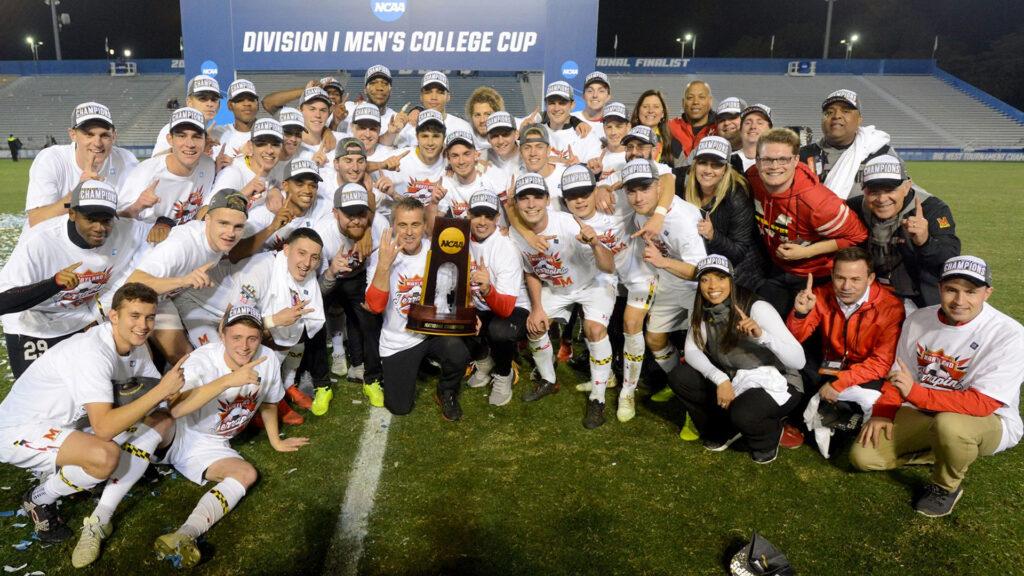
University of Maryland – Division I Men’s College Cup Winners
2. Professionalism
Professionalism can be seen in all college sports, and has a lot to do with the American sports mentality. Sport is important, student-athletes are important and this must be handled professionally.
This means that most universities employ physical therapists and sometimes even mental coaches to get and keep student athletes as fit as possible. Have you been tempted a little too much by the American burgers or huge soda drinks? Then you will soon be in the hands of the dietitian at the university! Nice extra services that are not always common in Dutch amateur or semi-professional football.
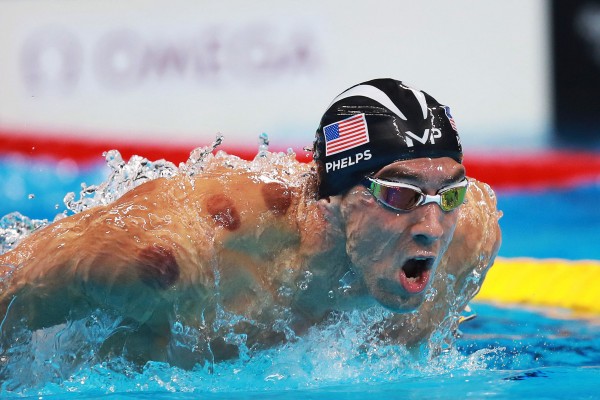
But even if you are in top shape and do not need diet or physiotherapy treatments, there are often a number of professional treatments available for you. For example, ‘cupping therapy’ is a common treatment for athletes. It is a technique to promote blood flow to muscles. The American swimmer Michael Phelps won gold at the Olympics with ‘cupping marks’! In short, you will be treated like a pro!
Olympic Champion – Michael Phelps
But being treated like a pro, means training like a pro! The schedule of a college soccer player is intense. Soccer training five times a week is an average, and strength and conditioning training is added to that. Go big or go home!
The video below shows how professionally College Soccer in the USA is handled. Game day between UCSB and UCLA, with a record number of visitors of 16,000! Check out the video to experience the ambiance of college soccer.
3. Facilities
The good facilities are closely related to the just mentioned professionalism that college soccer brings. Student-athletes are extremely important to a university, which is why every university does its utmost to make the student-athletes as comfortable as possible.
We get back from our Slamstox soccer players that facilities in the USA are way better than those of the average soccer club. For example, there is a gym available for the soccer team, a players’ room and those cool American dressing rooms: no standard facilities at amateur clubs in the Netherlands!
The video below from Purdue University gives a ‘Soccer Facilities Tour’, it gives a good idea of what the facilities are like for soccer players at American universities!
The players are also well taken care of during the away games. In football competitions in the Netherlands it is in the most extreme cases a 2.5 hour drive to the opponents, you understand that with the American distances this is a different case. To cover the great distances, a nice player’s bus is rented and at some universities it is even common to fly to the other side of the USA for a match! Then it really is a competition weekend, cool right!
4. The popularity of women’s soccer
While women’s soccer is slowly gaining in popularity in the Netherlands, mainly caused by the success of the Orange lionesses, ‘soccer’ is a huge and way more popular sport for women in the USA! So certainly for all soccer playing ladies in the Netherlands, the difference with the USA will in many cases be even greater
That America is good with women’s football is evident: they have won the most world championships. And did you know that 21 of the 23 soccer players on the American team first played for a college team and then went professional? That is the most common way to become a pro in America!
Lieke Carleer and Lisa Blankenstein are two of our slamstox football players who are now having a great time in America. Lieke was part of the Dutch U19 team and plays football and now studies at Arizona State University: one of the highest ranked NCAA D1 Teams! America offers great opportunities for every female student who wants to get the most out of her studies and football.
Would you like to read more about women’s football in the USA? A few months ago we wrote this article about it.
5. The season and some soccer rules
Earlier we talked about major differences between the Netherlands and the USA, the soccer season is one of them!
The American competition season lasts only four months: from August to November. Then there is a winter break, many international students go home because there are also school holidays. Then the school and sports season starts again in mid-January, when there is a lot of hard training until the end of February. After that, several friendly matches will be played. Then summer break starts again in May (Yes, American students have a lot of vacation!). Some football players choose not to go home, but to become part of a summer league. It lasts from mid-May to mid-July.
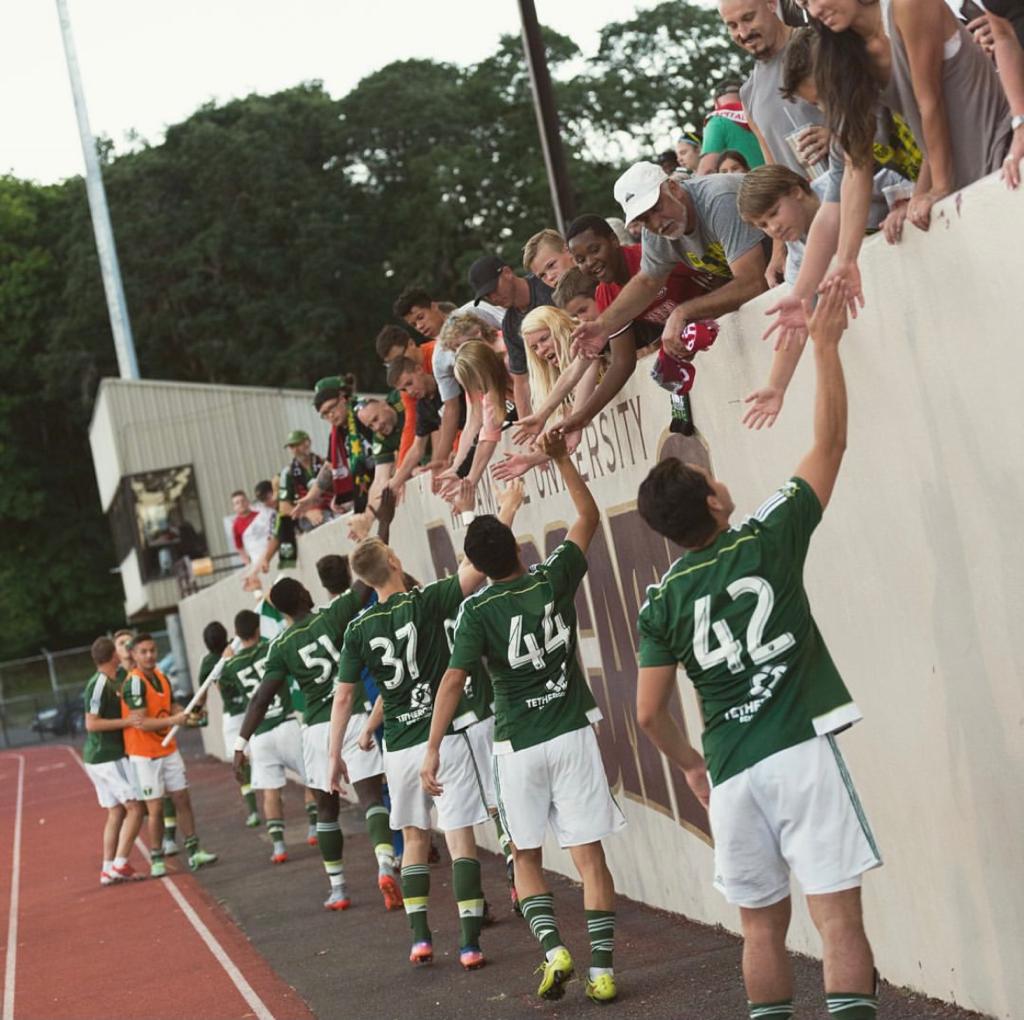
Bob Groenendijk, one of the former Slamstox football players, did this. He was part of the University of the Pacific and played for the Portland Timbers during the summer competition. This way he could continue to playing soccer in the summer, put himself in the spotlight with American coaches while his housing was paid! Sounds like a deal right?
Bob Groenendijk (42) during summer competition at the Portland Timbers
Also some rules during the matches differ from how we are used to it here in the Netherlands. In American soccer, players can be switched non-stop. This keeps the intensity of the match extra high! Another difference is that the clock does not count up to 90, but counts down. The clock is also stopped when the match is stopped due to an injury, for example.
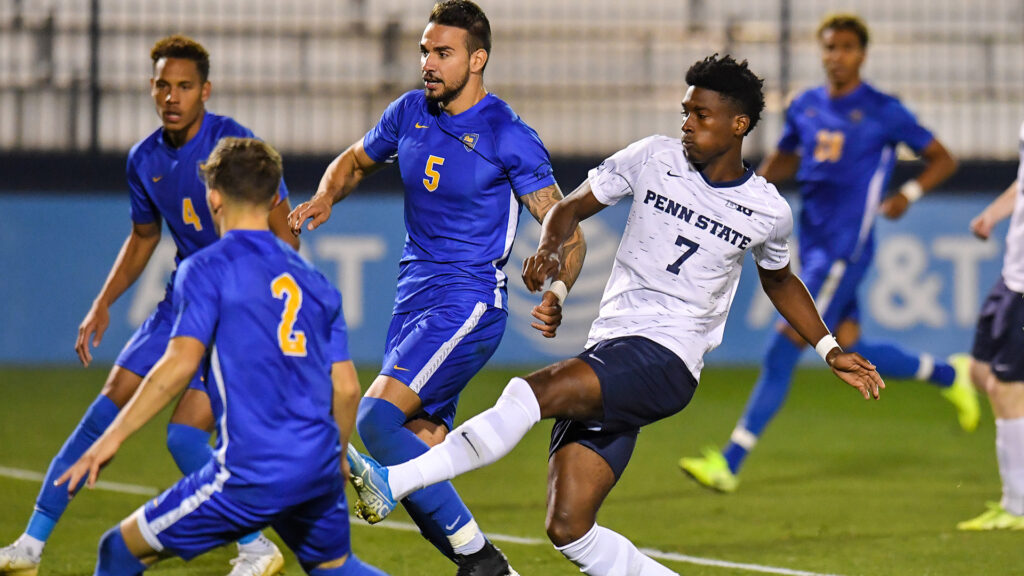
Penn State University vs. the University of Pittsburgh
Have you become enthusiastic about College Soccer? And would you like more information? Then check out the video below, where Wouter Verstraaten tells his story. During his youth, Wouter played at PSV and FC Eindhoven, left for California as a student athlete at the University of the Pacific, became an All-American, graduated and now plays soccer in England with South Shields. Impressive list, right?
Wouter had a great time in America and now likes to help other football players to find a good place in the college football world. In the video below he tells about his own experiences.
Do you want to study and play soccer in the USA? Or do you want more information about scholarships or the life as a student-athlete? Reach out, we can help you!
Why college track & field is more fun than ‘regular’ track & field
American and Dutch people are like water and fire. They are each other’s greatest opposites. The Dutch are straightforward (Americans call this “Dutch Directness”), where Americans always want to be friendly. The Dutch are quite down-to-earth, while the over-enthusiastic American likes to hear oneself talk. Moreover, the American is real risk-takers compared to the Dutchman. Where in the Netherlands everything is relatively small scale, in the US everything is oversized. So are the sports and events that take place in America. And the latter is exactly what our student-athletes are looking for. In this article, 5 reasons are summed up why you should choose college Track & Field.
Great “fight” between different schools
Facilities
The facilities for Track & Field cannot be compared to the facilities in the Netherlands. Obviously, it depends on the level of professionalism of the school, but overall, the facilities in America are breathtaking. For our student-athletes it is highly important to continue to develop themselves in America. Not only in class, but also on the sports fields. American schools are known for supporting their students getting the most out of themselves. Many of our Slamstox athletes are therefore faced with more professional facilities than they are used to.
Below is a sample of the facilities at Mississippi State Track & Field. Not only is the gym beautiful, but the stadium has undergone an upgrade. There is now room for more than 3,000 people. Can you see yourself going to Mississippi State already?
Combination school and academy
For many student-athletes, combining school and high-level sports is extremely difficult. Most schools in the Netherlands take little or no account of a student’s sport. In America, this is completely different. In America, the system is built in such a way that school and sports are perfectly compatible. The teachers take into account the time you have to spend on training or competitions. Obviously, this does not mean students can rattle off their schoolwork. The school assumes that you are motivated to get the most out of yourself in both facets. Of course, combining school and sports requires a lot of discipline and energy. However, it is fantastic to play sports matches in America. In addition, large distances are regularly travelled to get to the location. Playing a match is therefore often a major activity. This is also very special about college Track & Field.
Once in a lifetime experience
The combination of sports and studies in America is a unique one. Nowhere else in the world this mixture is so well organized as in America. For many student-athletes it is an experience to remember. It is a big step to move to America, but once you are settled it is the best time of your life. According to many, it is truly a “once in a lifetime experience”. You often only have one chance to grab this opportunity, but as soon as you do you should grab it with both hands. Believe me, this “opportunity” is not for everyone. Studying in America is for the “ordinary” citizen very expensive. The fact that the school helps pay for your studies is a great privilege that you get as a student-athlete. Moving to America is a big step, but you get a lot in return. You will cherish the contacts you make there for the rest of your life. Learning about other cultures is also an extraordinarily opportunity. There are many people of different nationalities in a team. It’s exciting but also very special.
Teamsport
In America, athletics is more of a team sport. Not only do you sport with your teammates, but you often live and study with your teammates as well. The feeling of being part of a real “team” is much more intents in America than in the Netherlands. It ensures that there is a strong bond within the team. Regularly, special team activities are organized to maintain and support this bond. Also, the course of a competition is different in America than in the Netherlands. In the Netherlands, individual performance is much more important than in America. In America, a lot revolves around the final results of the team. After a match, the most important thing is that your team is on top of the list, while the individual performance is only for your own development.
teamwork makes the dream work
Not only the athletes are part of the team. The coaches are also an important aspect in a team. It is also very important to have a good relationship with the coach. At Slamstox we make sure that the match between student-athlete, school and team is the perfect one.
Earlier we wrote about college coaches and the Olympics and about what a college coach looks for during the recruitment process. . Check it out!
Level of competitions
Due to the high level of professionalism of American schools, the level of competitions is very high. The coaches are available 24/7 and are always open to brainstorm or train with you. Moreover, the number of participants in sport competitions is higher. In the Netherlands, at big cross country races, there are about 30-40 participants in the race. In America it’s really different, sometimes 250 athletes are competing in such a race. In America you also are able to participate in more games than in the Netherlands. Often, In the Netherlands the cross and indoor seasons are intertwined. In America these seasons do not overlap, so you can focus on a specialization per period. This can increase you performance during competition.
Our own Track & Field specialist Famke Heinst has experienced all these great moments. She now helps the future Slamstox-athletes to find a great scholarship in the USA. Do you want to know more about the super fun time of Famke in America? Check out the Q&A.
As you can hear T&F college in America is very fun but also very serious. Are you ready to take on this challenge? We would like to help you.
Some college sports are different than the sports that we know in the Netherlands. The scores in College Volleyball are the same as we are used to: the first teams that wins three sets, wins the match. You can win a set if your team has 25 points and at least two points more than the opponent. In America you spell College Volleyball with two l’s. But ofcourse that isn’t the only difference with ‘regularl’ volleyball in the Netherlands. So what makes College Volleyball so different from ‘regular’ volleyball? You can read that in this article!
Atmosphere
The biggest difference is the Gameday atmosphere. Teammates, fans, mascots, everyone in the volleyball arena encourages each other and makes a lot of noise. On Gameday the arena is colored in the colors of the university. Many American schools have their own song called ‘fight song’ that can be heard loudly during Gameday. Watch this video below to get an even better idea of the atmosphere during Gameday.
You don’t play for a clubteam
In the Netherlands we are used to play volleyball with the team of your club. In the USA that is bit different: you don’t play for a clubteam, but for a college or university. Besides that, you don’t only train together, you travel, study and often live together with your team on campus. You play againts other universities in the conference and you all work together towards one goal: winning the conference. With this you have no chance of promotion, but you can qualify as a team for the national tournament, in which only the best teams in America are allowed to participate.
Facilities
The facilities for College Volleyball are almost incomparable with the facilities in the Netherlands. Ofcourse the facilities are different per school and depending on the professionalism of the school. But in general the facilities in the USA are more professional than in the Netherlands. For example, it is almost normal for sports teams to have their own gym and to have physiotherapists or even mental coaches available.
Super cool right? You don’t often see those facilities outside of America. It is therefore not surprising that a big part of the NCAA Division 1 players after college enter a professional career. This proves once agaain that the career of a student-athlethe a good preparation for a professional career!
In women’s volleyball you will find the best volleyball programs at Stanford, Nebraska and UCLA. The top 3 in men’s college volleyball can be found at University of Hawaii, Peperdine and Long Beach State.
Size
When you look at the surface area, America is already more than 200 times the size of the Netherlands. Therefore, the sports world in America is very big. This also applies to College Volleyball. In America, there are 1.836 universities that offer a volleyball program. Volleyball is a much bigger sport for women, but it is also done by men. There are 1.834 women’s teams and only 244 for men.
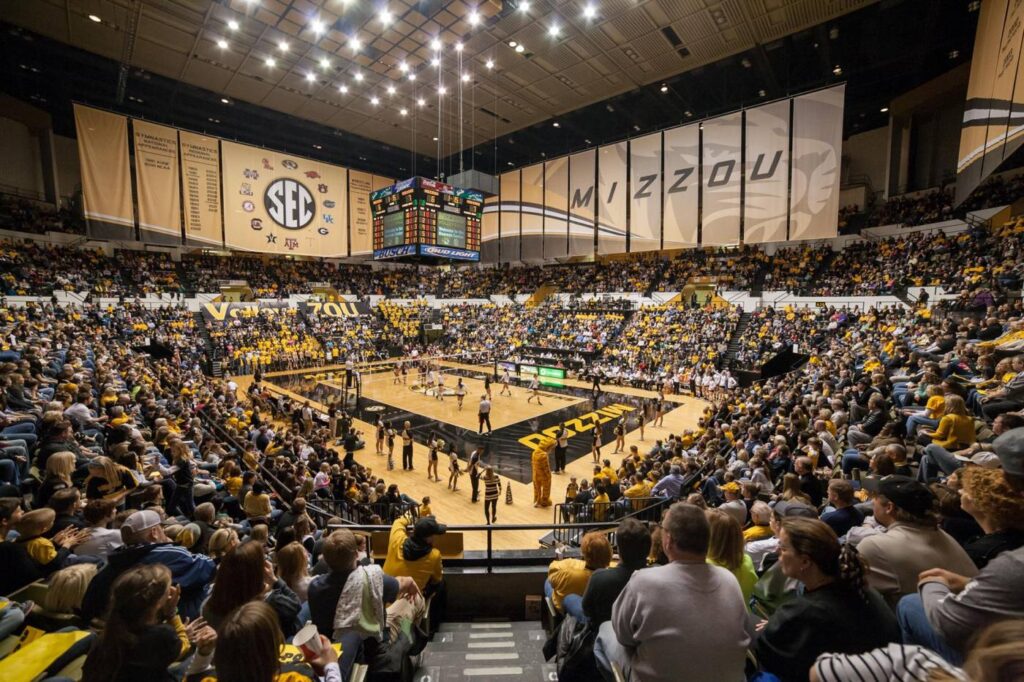
The size of the team in America differs from the team size in the Netherlands. In USA, the average is 16-20 players per team and in the Netherlands there are often 12-14 players. In addition, the teams in America play in much bigger halls where more spectator can cheer the teams. The biggest volleyball arena in women College Volleyball is in the Hearnes Center in Missouri. Here is room for 13.611 spectators!
Hearnes Center in Missouri
Slamstox volleyball player
One of the Slamstox volleyball players that currently active is in the USA is Puk Stubbe. Puk has become part of the Arizona Wildcats and plays volleyball at the highest level. A newspaper of the Netherlands did an interview with her and here tells Puk why she embarked on this American adventure:
“I am ready for this adventure. I just want to take a new step in my life.”
Puk Stubbe – student athlete at University of Arizona
Our Volleyball Specialist Ron Zwerver knows very well how beautiful volleyball is in America. He can tell you everything about College Volleyball, because Ron has been the volleyball coach for 4 years at Oregon State University. Now, Ron likes to help other athletes with guiding them to go to America to play volleyball and study here.
Do you want to know more about College Volleyball? Then also check this article!
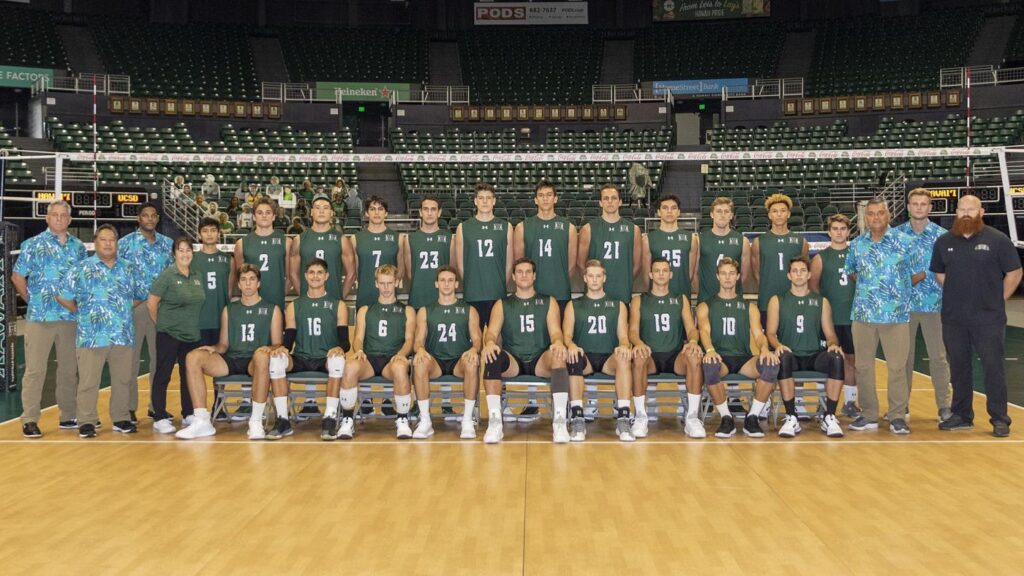
Men’s Volleyball team University of Hawaii
Do you also want to become a student-athlete in the USA? Or do you want more information about scholarships and volleyball in America? We are happy to help you further!
Why college swimming is more fun than ‘regular’ swimming
America is the best at creating the perfect environment to make the most out of your school and sports career. This is also the case for College Swimming & Diving. Take our Slamstox student-athlete Nyls Korstanje, who swam at the Olympic games last summer! He feels right at home at his university NC State. He tells you all about it in his Slamstox interview.
Besides winning swimming titles, Nyls is working hard get his bachelor’s degree at NC State. And he is happy to do so! Beside all the advantages of the perfect combination of your two passions, the best thing about swimming in America is that it is a lot of fun! But what makes College Swimming so much greater than average swimming? Keep reading to find out.
The facilities
America is the place to be for the professionalism surrounding sports. Besides being able to combine sports and studies, you can enjoy all the amazing facilities surrounding it. You will be in the pool pretty much every day, so it is super nice to have a cool environment. Think of the beautiful stadiums, locker rooms and multiple swimming pools, some of which are outdoors. All this, to create the perfect environment to help you achieve your goals. And then you have a cool stadium where all your fellow students can cheer you on. That is what will make you swim super-fast!
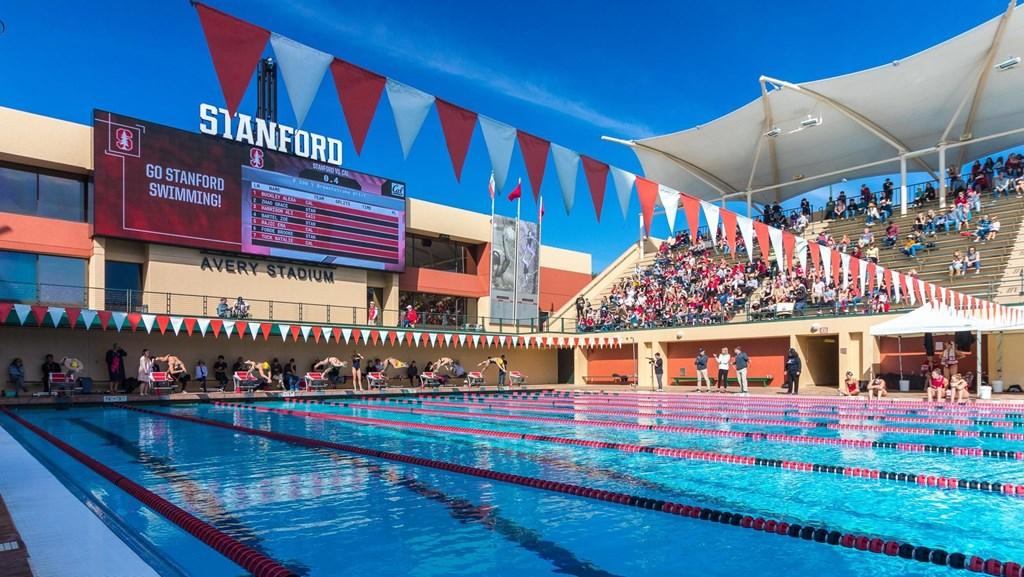
Avery Aquatic Center – Stanford University
The swimming pool is not the only thing that looks perfect. The entire campus radiates professionality and sometimes there are special facilities just for student-athletes. You kind of get a VIP status at your American college. You can think of separate student-athlete gyms, medical rooms, dining halls, but also academic rooms to study. Because yes, in America you need to study too!
You can find one of the coolest and most luxurious facilities at Purdue University in Indianapolis. This university was also on our list of Best College Swimming facilities in America. Look at the video below, to see what that looks like. Next level!
The team spirit
In the Netherlands you have the relay, but swimming is not really a team sport besides that. In America that is quite different. You do not swim for yourself only, but you try to score points for your college team too. With that team you swim different events, where together you try to score as many points as possible. The better you score, the better the team scores. You will try to win the championship with the team, but you can also win individual titles. But the most fun part of it all is to fight together with your teammates to achieve the best results possible, like winning the conference or the national title! Below you can see all the excitement and team spirit that comes with it.
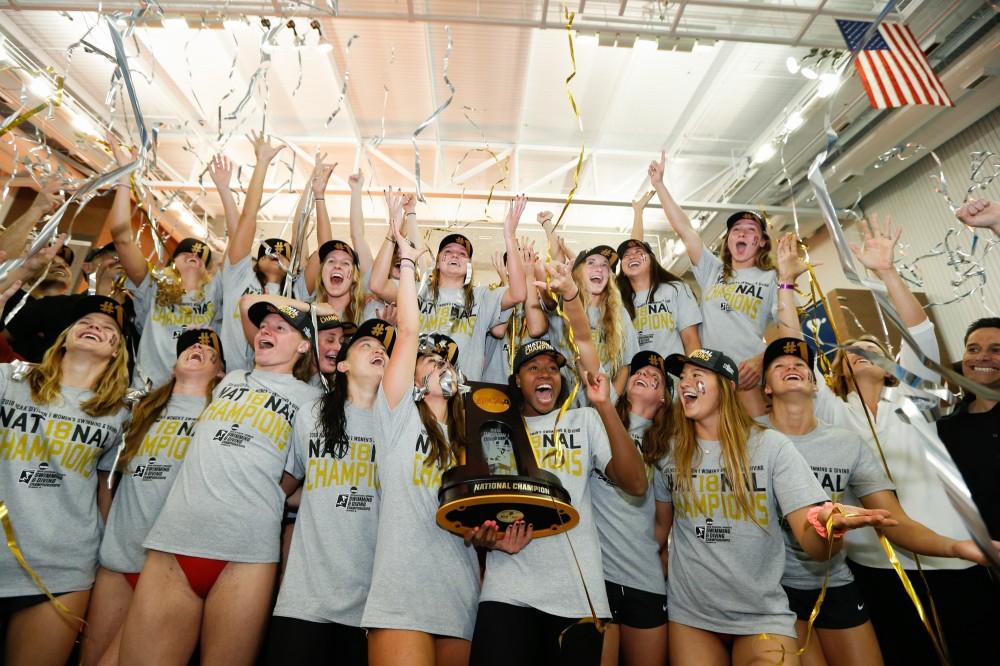
National Champions – Stanford Women’s Swimming Team
In America a team can consist of 15-25 student-athletes and you do pretty much everything with them. You practice together, eat together, study together, travel to games together en sometimes you even live together. This makes for a very close group of people. You might call it your second family. Because when you are so far from home, it is nice to have 20 people who have your back. Besides everything surrounding sports and studies, you will experience amazing adventures. Going to the mall, hiking, going out for coffee or going on a road trip when you do not have to swim for once. Together you experience many cool things and that will get you friends for life. Look at Nyls’s Instagram, where you can see all his adventures with his teammates!
The differences
College Swimming can be quite different than the ‘normal’ Olympic way of swimming. The events are the same (freestyle, backstroke, butterfly etc.), but there are some things that might be different than what you are used to. An example of that is the length of the pool. The Olympic pool has a length of 50 meters, but College Swimming they use 25 yard (22.86 meter) pools most of the time. Since the length of the pool is almost half of the normal 50 meters there is a standard rule of minimal one turn. More turning points means a faster average speed because the swimmer can come off the walls. That is one of the most fun things about College Swimming, because you can swim a lot faster.
Swimming career
College Swimming bring out the best in you. The countless (and early) practice hours will pay off and will make all the hard work totally worth it. Numerous of the most successful swimming athletes have a background as student-athlete at an American university. We can give you some nice examples of that!
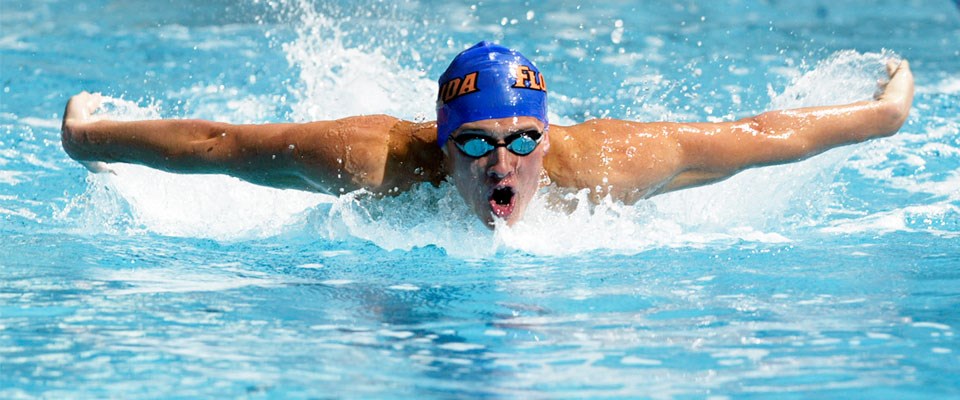
Ryan Lochte – Florida Gators
In the picture above you can see 12 time Olympic medalist and ex-student-athlete Ryan Lochte. Or think of Caeleb Dressel, who won a record of 7 medals at the World Championships in Budapest 2017. Both swam for the Florida Gators swimming team of the University of Florida. With 6 Olympic medals, it is no coincidence that Amy van Dyken is in the US Olympic Hall of Fame. She started her college career at the University of Arizona. After that she transferred to Colorado State University, where she broke her first of many records.
So we named a few universities that trained a some swimming legends already. Do you want a better overview of the best College Swimming programs in America? Click here for the men’s and here for the best women’s Swimming & Diving programs of 2021!
This shows that College Swimming & Diving is the most and best way to make the most out of your swimming career. Do you want to do that? College Swimming might be something for you! And we want to help you live that dream. So let’s meet!
Why college field hockey is more fun than regular hockey?
Hockey in the Netherlands is incredibly fun, that’s something we all know! But couldn’t playing hockey in a different country be exciting too? In America, for instance, you can combine hockey with education. Despite the sport remaining the same, ‘College Field Hockey’ is quite distinct from what we’re accustomed to in the Netherlands. Discover more about the unique experiences surrounding College Field Hockey!
Professionalism
Having your own physio, strength and fitness training sessions, swim recovery workouts, ice baths, and the extensive training hours are just a few aspects that make hockey there so professional. A true delight for enthusiasts! Ever dreamt of living the life of an ‘international’? In America, you have the opportunity to experience it, at your own level.
Away trips
Boston, New York, or perhaps California? In America, it’s quite normal to cover substantial distances for matches. Most teams are located on the East Coast, so you’ll spend quite a few hours on a special bus with your team (no more driving parents). Is the match really far away? There’s a good chance you’ll all take a flight together. Typically, matches that are a bit farther are clustered so you’re on the road for a weekend. The time between matches is spent together in hotels
Overtime and shootouts
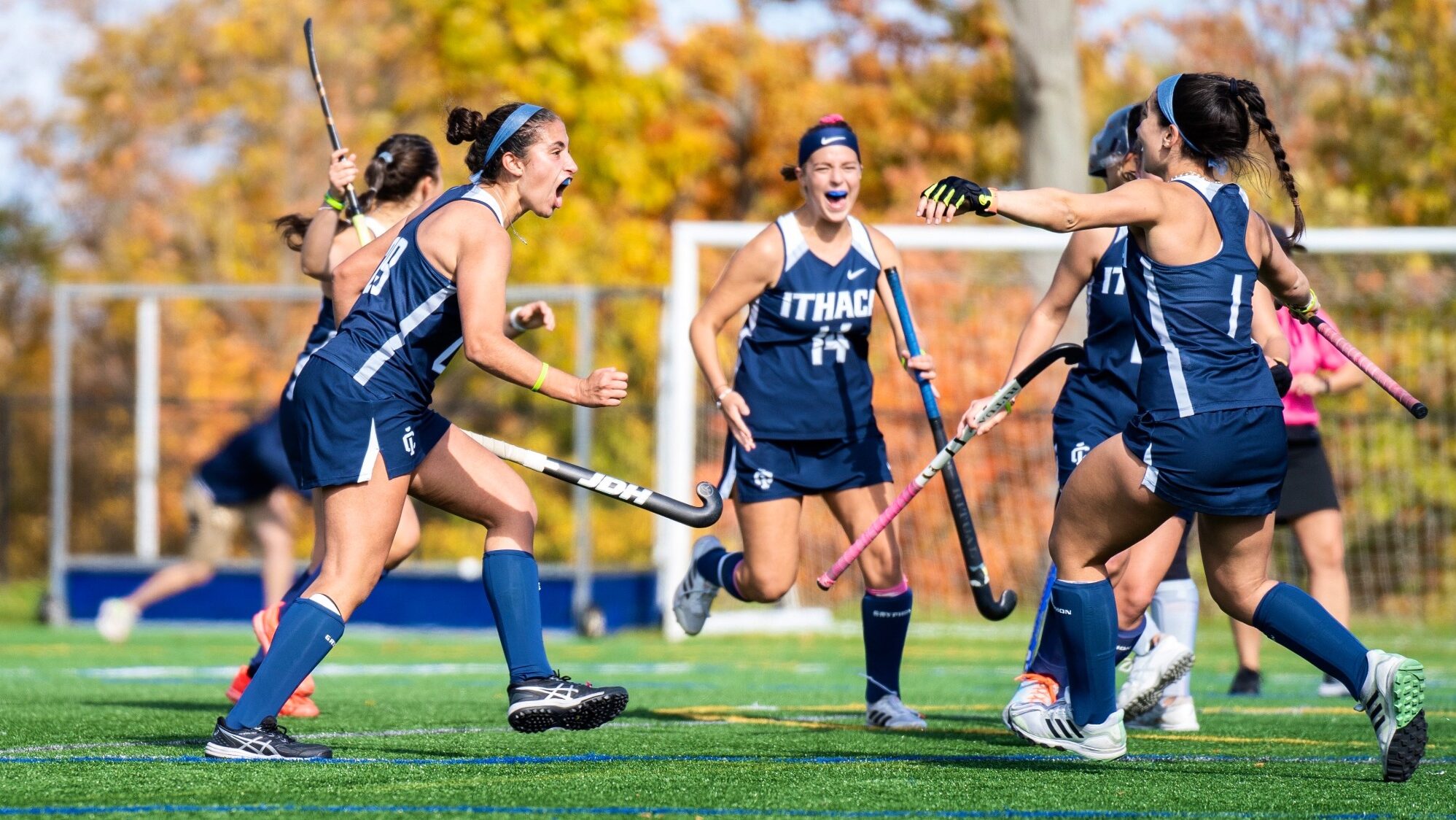
Hockey matches in America have to be decided! If the score is tied after regular playtime, there’s always ‘overtime’. And overtime isn’t your typical extension, definitely not. During overtime, you actually play with 7 players on each side on the full field! You immediately understand why those strength and fitness training sessions are necessary. Oh, and if you’re still tied after playing the full overtime? Then it’s time for shootouts. Better start practicing!
Tourney time!
The end of every College Field Hockey season consists of various tournaments. Initially, your goal is to make it to your ‘Conference Tournament’ with your team. This is the end-of-season tournament for your league. If you win this tournament, you advance to the big final tournament: The NCAA Championships. Following this tournament with several rounds of do-or-die matches, the ‘National Champion’ is eventually determined. Even if you don’t win your Conference Tournament, you can still qualify for the NCAA tournament by winning many matches during the regular season. As a result, you realize that every game has a purpose and you always step onto the field as a team with incredible determination.
“Your teammates are your sisters”
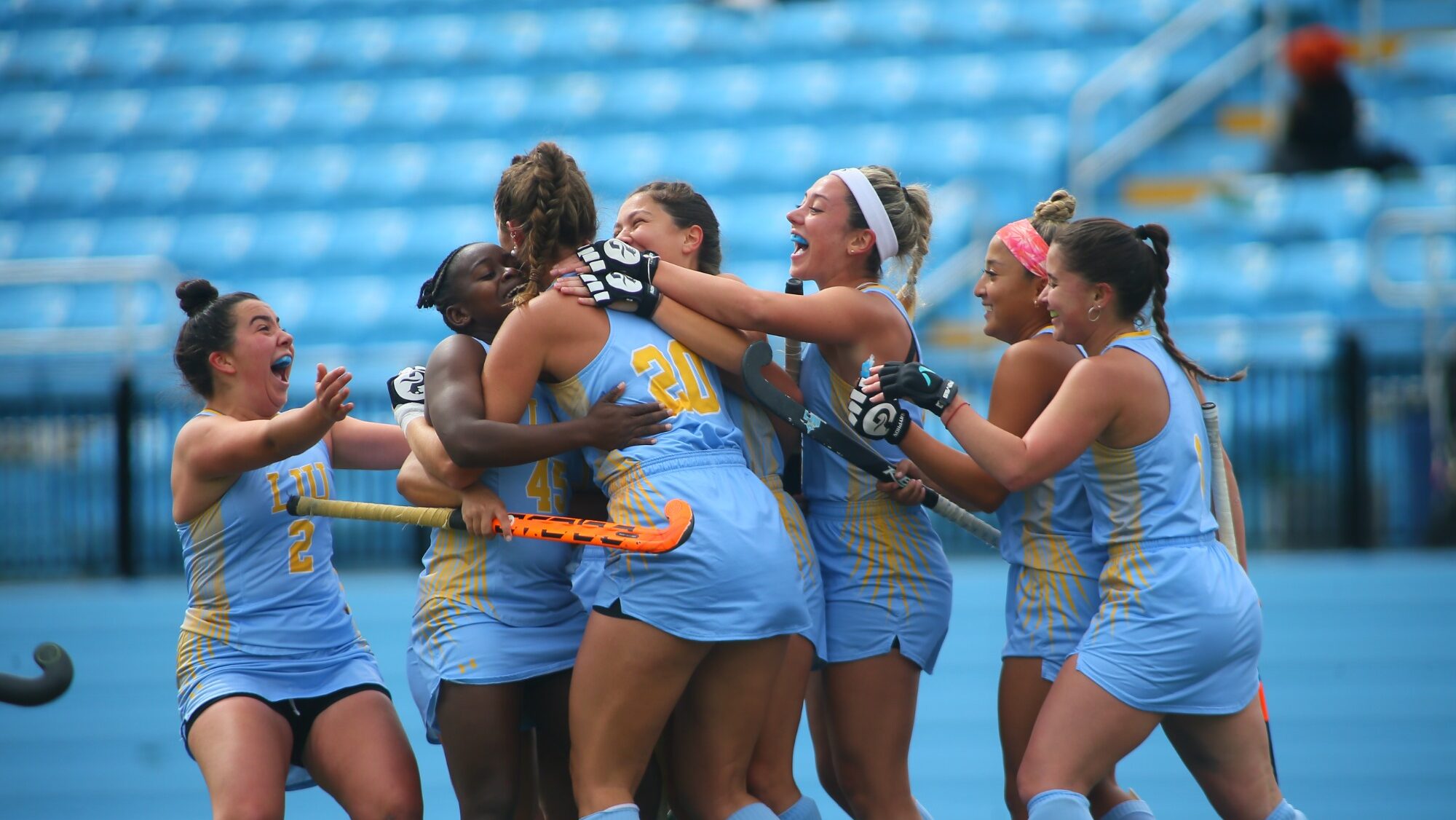
Many girls hear it when they arrive in America: ‘Your teammates are your sisters.’ As a down-to-earth Dutch girl, your initial reaction might be: ‘Yeah right, sure.’ But within a week, you realize nothing could be truer. Teams often consist of 25-30 players, and while you might not become best friends with everyone, you become incredibly close with a large portion in a short amount of time. Another great aspect: there are often more players from different countries on your team. Hello, vacation spots in Argentina, Australia, and South Africa!
As you can see, America and college field hockey have a lot to offer. It’s the opportunity to push your boundaries, explore more of the world, and continue playing hockey at the same time. Do you want to become a student-athlete too? Reach out! Let’s work together to explore your options and find the university that suits you best.
College tennis in the United States is growing. More and more young tennis players see this as the ‘route to the top’ of the tennis world and we understand that. We would like to outline a number of advantages of college tennis. Continue reading why college tennis is the ideal next step for you!
System
The system in the United States is unique. Scholarships are awarded based on your qualities as an athlete and / or as a student. These scholarships are often the basis for the final choice to play college tennis in the United States. Playing sports and studying in the United States is different than in all other countries because you can continue to make the combination here. You do not have to choose one or the other.
Social aspect
We cannot forget the social side of the story either. College tennis in the United Staten gives you the opportunity to meet people from all over the world. You do many things together with your teammates. Think of training, living and traveling together to your competitions. The fact that American universities distribute these scholarships gives many people the chance to gain a unique experience as a “student-athlete” in the United States.
Sport culture
Americans are almost all sports enthusiasts. You can see this in the visitor numbers. Everyone is proud of “their” school and they are more than happy to come and watch those who receive scholarships to represent “their” school. Most tennis players who play college tennis in the United States experience this as a sign of appreciation and respect.
Facilities
College tennis in the United States knows almost no limits. Schools spend a lot of money on scholarships and on facilities to promote performance as much as possible.
Are you enthusiastic and do you have the ambition to play tennis and study (college tennis slamstox) in America, then we would like to get in touch with you via info@slamstox.com
Did you know that among the top 100 golf players worldwide, 50 golfers played College Golf before turning pro? Bizarre right! And, according to us and our student-athletes, college golf is also ‘way cooler’! In this article we explain to you why.
The facilities and professionalism
Maybe you saw the article two weeks ago about why College Soccer is more fun than ‘regular’ soccer, two topics clearly emerged: the facilities and the professionalism. And that certainly applies to College Golf as well! The USA is the golf country, that is shown by the worldwide top players who are mainly American: Tiger Woods, Jordan Spieth, Justin Thomas and many more!
In the USA are no fewer than 1,320 universities that offer a golf program to student-athletes. The differences in levels and facilities between these universities are enormous – some have better facilities than others. This depends on the level (Division I, II or III) and the location of the university. For example, a school in Florida, which is very south and where it is always warm, has a smaller indoor sports building than a university in Wisconsin, which is far north and where it is very cold during winters.
The NC State golf team plays in Division I and is one of America’s top 50 teams! The team features an 18-hole par 71 course of 7,350 yards (6,625 meters) designed and built by ‘The Palmer Course Design Company.’ This is the only college golf course in the USA designed by Arnold Palmer (multiple PGA Tour winner). The course has a putting and short game area that may only be used by NC State University teams.
Below you can check out a facility golf tour of NC State.
Super cool right?! Facilities that golf clubs outside of America often do not come close to. It is not for nothing that College Golf is seen as the best preparation for a professional golf career!
In this article you can read more about some beautiful American College Golf facilities!
The season and rankings
As with most college sports, the season is different than most athletes will be used to in their home country. Within golf, also the rankings are a bit different: players receive an individual ranking and a team ranking. In College Golf mainly play stroke matches are held, which are based on a team score. When you start a match with a team of 5 players, the best 4 scores are added together, which makes the team score. For example: five players achieve individual scores of 71, 73, 74, 76 and 81. The best four scores are added together, which makes a team score of 294.
That doesn’t that you don’t play for individual score any more, because you definitely do! To explain it as best we can, we take you through the year of a college golfplayer.
Since the ‘fall season’ is the time period of September to November, it’s the season in which the majority of student-athletes start their freshmen semester at their university. It is also the first period of every following school year. During fall season a lot of matches are played. The results of the matches are not for teamranking, but for you personal WAGR-rankings. Besides the matches a lot of training takes place during fall season, to make sure that every player is fully prepared for spring season (in which the teamscores play an important role). During fall season, approximately 5 matches played. Each match lasts on average 2 days. The day before it is common to start getting used to the court and prepare yourself as well as possible. Which makes the total days that you are busy with a match 3. These days are mostly even extended by 1 or 2 days caused by the long travel distances to other universities. For shorter distances a player bus is hired, for longer distances it is common to travel by airplane.
So, that’s fall season! After fall season, the christmas holidays start. Which is why a lot of student-athletes go home. At home, no matches are played but most student-athletes keep training to stay fit. And spend time with familiy and friends ofcourse! It is important to get a bit of rest since the next (busy) season is just around the corner… Spring season!
The official spring season starts from February. But most teams are already busy during January since universities organize a training camp for the team. The training periods are often at a different location from that of the university. For example, universities that are located more in the north often look for a sunnier spot in the south, sounds good right? When the training camp is over, spring season starts. 5/6 matches are played during spring season, which are played for the team ranking. Within spring season the first conference matches are played, so your team plays against other teams within the same conference. The ultimate goal is to win the conference. Because when you do, you are qualified for the NCAA National Championships. But also teams with a high ranking are qualified for the national championships. For many student-athletes it is a dream to one day be able to compete in the NCAA National Championships. Only the very best in the country compete here, and prizes are awarded to the best teams, but also to the best individual players.
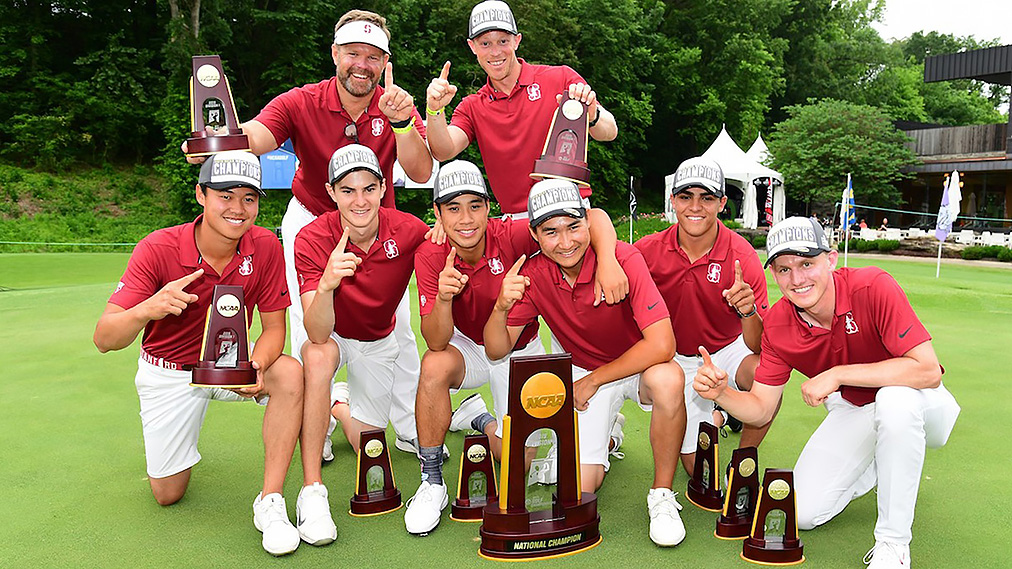
Stanford Men’s Golf Team – NCAA Championships Trophy’s
In general spring season ends at the end of April, but depending on the results that were achieved the season lasts longer. The conference championships are often in the last week of April and the first week of May, the NCAA National Championships are from the end of May to the beginning of June. Most student-athletes go home during summer break but keep playing matches to receive points for their EGR or WAGR ranking. And then…. fall season starts again! Can you imagine those 4 years flying by?! They really do!
The team spirit
The team spirit, the photo and the paragraph above actually already show it, the team feeling and the responsibility towards the team bring an extra dimension to college golf. That makes you want to win for yourself, but also for the team. That golf is no longer an individual sport, but a team sport. And that your teammates don’t just become friends, but friends who have the same goal and with whom you share your entire student life. And that means that, even after your study time in America, you have friends from all over the world.
College Golf – Team spirit
Slamstox golfplayers
Hester Sicking, Mayka Hogenboom, Daphne van Son, Felix van Dijk, Jerry Ji: some of our slamstox-golfers who are currently playing College Golf in the USA! All of them are playing golf in Division I teams.
Hester Sicking is part of the golfteam at South Dakota State University. Earlier this month we wrote a University Spotlight about Hester and her university. Curious about Hester and her university? Check it out here.
In November last year, Mayka Hogenboom was in our university spotlight as well, the article about Mayka and her Kent State University you can read via this link.
Also Daphne van Son is active as College Golfplayer at a Divison I University, which is the University of Tennessee at Chattanooga. More about Daphne and her university you can check out here!
Felix van Dijk, student-athlete at Illinois State University, was in our University Spotlight last year. Back then, we asked him why he chose for a life as student-athlete, he told us the following:
“The choice to leave for the USA and play College Golf is something that I am very happy with. Here I have the opportunity to develop myself best as an athlete, but also as a person.”
Felix van Dijk – Student-Athlete
The article about Felix and Illinois State University you can check out here.
Jerry Ji is as a golfplayer part of Illinois State Redbirds, Jerry and his team are currently placed 4th in the USA. That’s extremely high! Besides that, Jerry is one of the top players of his team: he earlier received the price of ‘Big Ten Freshman of the Year’. Because Jerry’s team is placed high at the moment, they will participate in this year’s NCAA National Championship. That’s amazing, to be continued…. Go Redbirds!
Jerry Ji – Illinois State Redbirds
Do you, just like other slamstox-golfers, want to become a student-athlete in the USA? Or do you want more information about scholarships and student-athletes? Reach out! We will help you!
The college tennis season is in full swing again and on the tennis courts in America our Dutch top players are ready to shine. Spread across various universities and conferences, they are showing how talent, hard work and ambition come together at the college level.
In this article we highlight a number of Dutch tennis players who we expect to make great strides and impress their teams this season. Wondering who these are? Read on quickly.
Mees Röttgering
University: Wake Forest University Year: Freshman Division/Conference: NCAA Division I / ACC
Mees Röttgering began his college career this winter at Wake Forest University, the university is currently the reigning national champion. The top Dutch talent had a historic junior career, breaking through at the international level at a young age. In 2024, Mees made it to the semifinals of the Australian Open Boys’ Singles and reached an ITF Futures final, becoming the youngest Dutchman ever to reach an ITF World Tennis Tour singles final. A final at the Wimbledon junior tournament and a win at the prestigious ITF Junior Finals followed later that year. In early 2025, he made his ATP Tour debut in Ahoy Rotterdam. With this baggage, we expect Mees to make an immediate impact in the ACC.
Abel Forger
University: University of Texas Year: Freshman Division/Conference: NCAA Division I / SEC
Abel Forger joins the University of Texas’ strong tennis program this Spring Semester. The Dutchman boasts an impressive international resume, having participated in all four Junior Grand Slams and a career-high ITF junior ranking of #29. With ATP rankings in both singles and doubles and a proven winner’s mentality, we expect Abel to quickly adapt to the high level within the SEC.
Manvydas Balčiūnas
University: University of San Diego Year: Freshman Division/Conference: NCAA Division I/West Coast Conference
Manvydas Balčiūnas has left for the West Coast to join the University of San Diego tennis team. With four Dutch titles and multiple ITF junior wins, he will now become the new teammate of Slamstox tennis player Stian Klaassen, among others. At a young age he was already on the court and since then he has been working daily with complete dedication to his dream: to reach the world top. His discipline, physical preparation and mental strength make him a player to be reckoned with, and with that Manvydas is ready to make an immediate impression in college tennis.
Jade Green
University: Clemson University Year: Senior Division/Conference: NCAA Division I / ACC
After three strong years at Western Carolina University, Jade made the move to Clemson University last summer to play her Senior year here. With a 17-2 singles record, a long winning streak and multiple records to her name, Jade was one of the absolute standouts in the Southern Conference. She was voted SoCon Player of the Year, was on the First Team in both singles and doubles, and combined her athletic achievements with academic accolades. With her athletic build, powerful backhand and tactical play, Jade is a complete player. We expect her to conclude her college career with another season at the top level.
Of course, these are not the only Dutch tennis stars active in America this season. There are many more talents ready to show themselves on the college courts. Follow our socials to not miss a single performance and stay up to date on the college tennis season!
Would you like to combine tennis with studying in America? Then feel free to contact contact us and discover your possibilities.
From college soccer to first goalie at the IJselmeervogels
In addition to being a college soccer recruiter within Slamstox, our own Bram Kaarsgaren is also still making headway in terms of his own soccer career. He is now under contract with IJsselmeervogels for the second year and recently gave an interview for the local newspaper about his career so far and recent changes.
After a period of hard work, waiting and trusting his own path, Bram has recently officially become the first goalkeeper of IJsselmeervogels. A milestone that shows that success rarely comes in a straight line. In a world where goalkeepers are often only seen when things go wrong, Bram consciously chose for development, patience and investing in himself. A choice that was anything but easy, but brought him to where he is today.
The goalkeeping profession sometimes feels like an island. You stand apart, literally and figuratively. Ninety minutes you can be invisible, only to determine everything in one moment, or be judged. That takes mental strength. “You do everything together, but at the same time you are different from the rest. That’s what I like about it. You have to be strong in your head.” That mental resilience is no accident, but the result of choices Bram dared to make early in his career.
At the age of 19, he was at a crossroads. At FC Den Bosch he was in danger of becoming third goalkeeper in the under 23. Waiting for an opportunity felt like standing still. Instead, he opted for action and left for America. “The combination of soccer and study was very important to me. In America I could do both. That felt like an opportunity I had to take.” It meant letting go of the familiar, but also becoming an accelerated adult.
America
His American adventure began at Carson-Newman University in Tennessee. Far away from home, in a completely new environment, Bram grew not only as a goalkeeper but also as a person. Athletically, he developed into a dominant force under the crossbar: three times in a row, he won the SAC Conference with his team and was also awarded individual awards, including “Defensive Player of the Year” and “Defensive Player of the Week” several times. At the same time, he earned a bachelor’s degree in marketing. “But perhaps even more important than the degrees: I learned to invest in myself,” he said.
His bachelor’s degree was followed by the next step: NCAA Division I soccer at Southern Methodist University in Dallas. There he combined soccer at the highest college level with a master’s degree in Sports Management. Getting minutes, responsibility and being sharp every game. It was exactly what he needed to continue to grow, both athletically and mentally.
Those experiences continue to this day. At Slamstox, Bram works as a soccer consultant, where he uses his international experience, academic background and knowledge of the game to guide young players in making thoughtful choices about their sporting and personal future. He knows better than anyone how decisive the right decision at the right time can be.
IJselmeervogels
After his return to the Netherlands, his path via TEC eventually led him to IJsselmeervogels. There a new phase started: waiting. Behind Jaimy Schaap, Bram was second goalkeeper for a long time. For a goalkeeper perhaps the most difficult role there is. No substitutes, no minutes to show off. Yet he stuck to the plan. Believing in the process, in his development, and in the moment that would come.
That opportunity came, unexpectedly and under double emotions. Schaap was advised to quit goalkeeping because of persistent physical complaints. A painful moment for everyone. At the same time it meant his breakthrough for Bram. IJsselmeervogels expressed their confidence and extended his contract until 2028. A confirmation of what had been there all along: confidence, even when his role was different.
Now he is under the crossbar as first goalkeeper. With more responsibility, but the same down-to-earth attitude. He approaches every match as a final. The contrast with the championship year is great, but right now the club is showing its character. “Roll up your sleeves and move on,” is the principle. For Bram personally, success means above all constant performance. “It should be as little about me as possible. Then you have done well.”
Bram Kaarsgaren shows that growth often starts with daring to let go. From a lonely position under the crossbar to a leading role both on and off the field: his story is one of courage, perseverance and investing in yourself.
Do you, like Bram, want to seize the opportunity to play sports and study in America? Schedule an introductory meeting with us!
The college sports season is back in full swing as the Spring semester has begun. And also on the volleyball courts in America, our own Slamstox toppers are ready to shine. Spread across several universities, they are showing how strength, technique and mentality come together at a high level.
In this article, we highlight some volleyball players who we expect to make great strides this season and play important roles on their teams. Wondering who these are? Read on quickly!
Axel van Baars
University: Lincoln Memorial University Year: Senior Division/Conference: NCAA / Independent
Axel van Baars is a physically very strong and explosive attacker who competes for Lincoln Memorial University. Since coming to Lincoln Memorial, he managed to win the conference every season with his team. With his experience, strength and mentality, we expect Axel to play a contributing role on the team this year as well. He is ready to give everything in his last year in America.
Thijs van der Wal
University: Emmanuel University Year: Sophomore Division/Conference: NCAA/Conference Carolinas
Thijs van der Wal begins his second season at Emmanuel University. Thijs is known for his steady passing, strong offense and game insight. Not for nothing, he was already named one of the most decisive players last year by his coach and is seen as one of the important players this year as well.
We have every confidence that Thijs will take further steps in his development at Emmanuel this season and can show great things.
Lucca Stoelinga
University: Morningside College Year: Freshman Division/Conference: NAIA / Great Plains Conference
Lucca Stoelinga begins his college adventure at Morningside College this season. A setter, Lucca is versatile and can also perform as an attacker, giving his team additional offensive options.
His greatest strength is his rapid development: when Lucca sets a goal, he works tirelessly to achieve it. With multiple national titles and victories at international tournaments, we expect Lucca to quickly adapt to the college level and become a valuable link within the team. In any case, his coach already has full confidence in the Dutch playmaker as well.
Xander Bomert
University: University of Charleston Year: Sophomore Division/Conference: NCAA/Conference Carolinas
Before leaving for America, Xander Bomert played in the Dutch premier league and was part of the Dutch U19 National Team. Xander is known for his explosiveness, timing and impressive attacking height. During his freshman season at Charleston, he immediately showed his value with 208 kills and a season record 28 kills in one match. His power jump serve, blocking ability and offensive variety make him a constant threat to opponents. Not for nothing do his coach and team praise him.
Of course, these are not the only Slamstox volleyball players active in America this season. There are many more talents ready to showcase themselves at the college level. Follow our socials to not miss a single performance and stay up to date on the men’s college volleyball season!
Would you like to combine volleyball with studying in America? Please feel free to contact contact us and discover your possibilities.
The road to the world’s top is rarely straight. Even Mees Röttgering, one of the greatest tennis talents of his generation, knows that. The former world number one in juniors is taking the next step in his career via Slamstox and will leave for the United States this spring to play college tennis at Wake Forest University, the reigning national champion.
For Mees, it is not a farewell to his pro dream, but rather a conscious strategic choice. So he also tells in conversation with NU.nl
The former world number one in juniors wants to make the step to the world tennis top via the university circuit. “Nothing has changed about my ambitions,” he said.
About a year ago, tournament director Richard Krajicek broke the news that Röttgering had received a wildcard for the ABN AMRO Open, the Netherlands’ biggest tennis tournament. At seventeen, the young Limburger got a taste of the big time on the Ahoy center court in mid-February. A stunt was not in the cards, but the potential was clearly visible in the finalist of the junior tournament of Wimbledon in 2024.
But a good junior season does not guarantee a quick breakthrough at the seniors, as the past decades have proven more often than not. The left-handed Röttgering – together with the one year younger Thijs Boogaard considered the Dutch hope for the future – did make strides last year, but the road to the top is still long. The world number 623 has now deliberately chosen the route via college tennis.
“Paul Haarhuis, who has played college tennis himself in the past, put me in touch with Wake Forest University,” Röttgering told NU.nl from the US. “That is the reigning champion of the United States. I have already been here at the end of last year and immediately had a good relationship with the players and coaches. Next weekend the new season starts.”
Röttgering says he “thought for a long time” about the important step in his fledgling career. “But because I lived in the south of the Netherlands, it was incredibly difficult to train in the Netherlands. Then I just sit in the car twenty hours a week,” the talent says. The National Tennis Center is based in Amstelveen. “And here in America I was offered a good program. And of course I also get paid well for it, but that is certainly not the main reason.”
College tennis route proven recipe
In recent years, the popularity of the college tennis route on the way to the top has increased. Some 20 years ago, John Isner and others managed to break through via college tennis, but it was not very common. John McEnroe and Jimmy Connors also walked the path in the past, but for them, as Americans, the choice was easier.
Today, college tennis is a tried and true recipe and no fewer than sixteen players with college memberships are in the global top 100. World number eight Ben Shelton is the best known. Röttgering is only too happy to follow his example.
“Reaching the top remains 100 percent my goal. I’m not going to America because I want to study and I like tennis so much. That’s not how I’m in it at all,” stressed Röttgering, who takes only a limited number of courses. “The level of college tennis has increased tremendously in the last decade. There are also just guys playing who are in the top three hundred of the ATP.”
Röttgering says his university gives him the freedom to collect points for the world rankings as well. “They are very flexible. The coaches require in certain weeks that I am there, but in some weeks I also get time off, for example if we play against a somewhat lesser team. I will go off a lot of tournaments in the United States. So for the time being I will play a little less on gravel.”
‘Sometimes you think: where did I end up now?’
Röttgering turned in his first full season on the senior tour last year. The former junior list leader started 2025 as number 868 and moved up a spot or 250. A pro title is still missing from his list of honors and he suffered more defeats than he was used to as a junior player.
“It was actually a mediocre or bad year, but in terms of results it wasn’t too bad. I just need to become more consistent. But traveling with the seniors has been good for me. More than with the juniors you sometimes have the feeling: where did I end up again?”
This week, Röttgering does not have that feeling, as he plays a so-called Future tournament (the lowest category of pro tennis) in Winston-Salem. The complex is a stone’s throw from his university. There, just before his start of the new season, he is still finding his way around campus. “I’ll see how long I stay here. It could be five months, or it could just be four years.”
Mentor Sjeng Schalken applauds choice
Sjeng Schalken acted as a mentor for Röttgering in recent years. The former world number 11 does understand the talent’s choice to go to the U.S.
“It’s a strategic move, a sidestep after going through the knees for a while. This is a way to get stronger as a player,” said Schalken (49). “It’s also a financial issue, because a lot of money goes into college tennis. Think of it as a kind of Bundesliga, where you play seven to eight weeks for your club.”
Schalken has been involved with Röttgering in the background in recent years, and the two also trained together regularly. “Last season was very tough for Mees. The ATP Tour is definitely not a children’s playground and it is very difficult to get through. But absolutely nothing is lost yet.”
“My ambitions have not changed; reaching the top remains my goal.”
Mees Röttgering
The Role of Slamstox
Through Slamstox, Mees is guided in his transition to the United States. From finding the right university to guiding him through the process surrounding college tennis, Slamstox helps athletes combine sports and future smartly, without letting go of their top sports dream.
For Mees, this means training and playing at the top level, less travel time than in the Netherlands and an environment where he can fully focus on his development as a player.
Why college tennis?
College tennis has long since ceased to be an “intermediate step. The level is skyrocketing over the past decade and more and more players are using the college circuit as a springboard to the ATP Tour. In this, Mees follows the example of players like Ben Shelton.
At Wake Forest, he finds everything he is looking for:
a top sports program
strong coaches
close-knit team
AND the flexibility to play international tournaments in addition and continue to accumulate ATP points
In America you can study and play many different sports. Also this season we keep an eye on our Dutch toppers, who are ready to shine. In this article we highlight a number of athletes who we expect to make great strides and impress in this Spring season. Wondering who these are? Read on quickly!
Joska Nelis
Sports: Women’s Golf School: Murray State University Year: Sophomore Division/Conference: NCAA Division I / Missouri Valley Conference
Joska Nelis made the move from JUCO to NCAA Division I this winter and will now play for Murray State University. A huge step, but one that completely fits her impressive development of the past few years. At her Indian Hills Community College, Joska showed time and again that she was among the absolute best. She was named NJCAA DI Women’s Golf All-Region 11 First-Team, was Athlete of the Week no less than seven times and picked up three individual tournament victories. With the lowest average round score on her team, she was a true leader on the course.
Joy van Loon
Sports: Men’s Water Polo School: Ottawa University Arizona Year: Grad student Division/Conference: NAIA/SAC Conference
Joy van Loon is a versatile and experienced water polo player who developed at several clubs in the Netherlands, while also being active in the Eredivisie. His talent was noticed at an early age: at the age of eleven, Joy was selected for WOC training and later participated in selection training for the Dutch Youth National Teams. Although he narrowly missed the final selections, these experiences at the highest level played a major role in his development as an athlete. Now Joy is continuing his career at Ottawa University Arizona, where he will have another opportunity to compete against strong opponents in the NAIA.
Bibi van ‘t Veld
Sports: Women’s Track & Field School: North Central Texas College Year: Freshman Division/Conference: NJCAA Division I / NTJCAC
Bibi van ‘t Veld is in her first year at North Central Texas College. In the Netherlands, she already showed great speed and competitive toughness. Her achievements do not lie: two national U20 titles with the relay, a bronze medal at the Dutch senior championships and several finals at national youth tournaments. She also managed to compete strongly individually, including fifth place in the 400m indoor at U20. With this strong foundation, expectations are high for her first season in the NJCAA.
Evie de Roos
Sports: Women’s Track & Field / Cross Country School: Converse University Year: Freshman Division/Conference: NCAA Division II / Conference Carolinas
Active in athletics from a young age, Evie de Roos has had an impressive road. In the Netherlands, she was structurally among the top in her age category, including a 7th place at the U20 1500m NK and a 15th place at the senior NK, both as a freshman U20. She also took silver at the NK relay and helped her team to promotion to the highest national division. After years in high-performance training groups, Evie is now ready for her next step at Converse University.
In preparation for the NK Juniors 2025 we spoke to Eviein Hilversum about the championship and her outlook on her American adventure.
Of course, these are not the only Dutch student-athletes who will shine in America next semester. There are many more top athletes ready to show their talent. So follow our socials to not miss any of our athletes’ achievements!
Would you like to experience the combination of sport and study in America yourself? Then fill in our application form and we will contact you to discuss your possibilities.